Key Takeaways
- Payment history is the single largest factor in your credit score, accounting for 35% of the total.
- Consistent on-time payments are crucial for building a strong credit profile.
- Late or missed payments can significantly damage your score and stay on your report for years.
- Being added as an authorized user (AU) on someone else's account with a strong payment history can positively impact your credit, but lender practices vary.
- Building a solid payment history through your own credit accounts is essential for long-term credit health.
- Tools like autopay and secured credit cards can help you establish and maintain a positive payment history.
Payment History: The Keeper of Your Financial Nest
So, what exactly payment history, and why does it wield so much power? Simply put, it's a record of how reliably you've paid your bills over time. This includes credit cards, loans (student, auto, personal), mortgages, and even some utility bills if they've gone to collections.
But let's get back to payment history. It’s not just about whether you paid, but when you paid. Paying a day late can ding your score, even if you eventually catch up.
Lenders see a consistent history of on-time payments as a sign of responsibility and trustworthiness. It tells them you're likely to repay future debts as agreed, making you a less risky borrower. Conversely, a history of late or missed payments raises red flags. It suggests you may struggle to manage your finances, increasing the likelihood of default.
Remember, lenders aren't just looking at your ability to repay; they're also assessing your willingness to repay. Your payment history is a direct reflection of that willingness.
Building Your Credit Fortress: The Payment Plan
If you're just starting out and have a limited or no credit history, establishing a positive payment history can feel like a daunting task. This is where secured credit cards come in. Secured credit cards are designed for individuals with limited or damaged credit. They require a security deposit, which acts as your credit limit. By making regular, on-time payments on your secured card, you can begin building a positive payment history and demonstrate your creditworthiness.
So, be sure to prioritize all your bills, from your rent and utilities to your student loans and car payments. A missed payment on any of these accounts can negatively affect your credit score.
The 30-Day Danger Zone
Critical TipA payment is only reported as 'late' to bureaus if it is more than 30 days past due. If you miss a due date by a few days, pay it immediately to avoid credit damage!
Real Stories: Payment History in Action
Let's look at some real-life examples of how payment history can impact your financial life.
-
Nico, the Newcomer: Nico recently arrived in the US and has no credit history. He's trying to rent an apartment, but landlords are hesitant to approve his application due to his thin file. Nico learns that becoming an authorized user on his aunt's credit card, which has a perfect payment history, could help him establish a credit score and increase his chances of getting approved. He takes this step, and within a few months, he sees a noticeable improvement in his credit profile. He's still working on building his own credit accounts, but the AU account gave him the initial boost he needed. A secured credit card, diligently managed, will be his next step.
-
Riley, the Rebuilder: Riley made some financial mistakes in the past and has a history of late payments. She's now trying to rebuild her credit, but she's struggling to qualify for loans and credit cards with decent interest rates. Riley commits to paying all her bills on time and starts using a secured credit card to demonstrate her responsible behavior. Over time, her payment history improves, and her credit score gradually increases. She's still facing some challenges, but she's determined to turn her financial life around. Slowly but surely, she's replacing the shaky sticks in her nest with sturdy ones.
-
Time-Sensitive Tina: Tina needs to lease a new car within the next two months. Her credit score isn't terrible, but it's not great either, and she knows that a better score could save her money on interest rates. Tina decides to focus on improving her payment history by setting up autopay for all her bills and paying down her credit card balances. She also disputes a late payment that she believes was reported in error. Within a month, her efforts pay off, and her credit score increases enough to qualify for a lower interest rate on her car lease. She built her nest just in time!
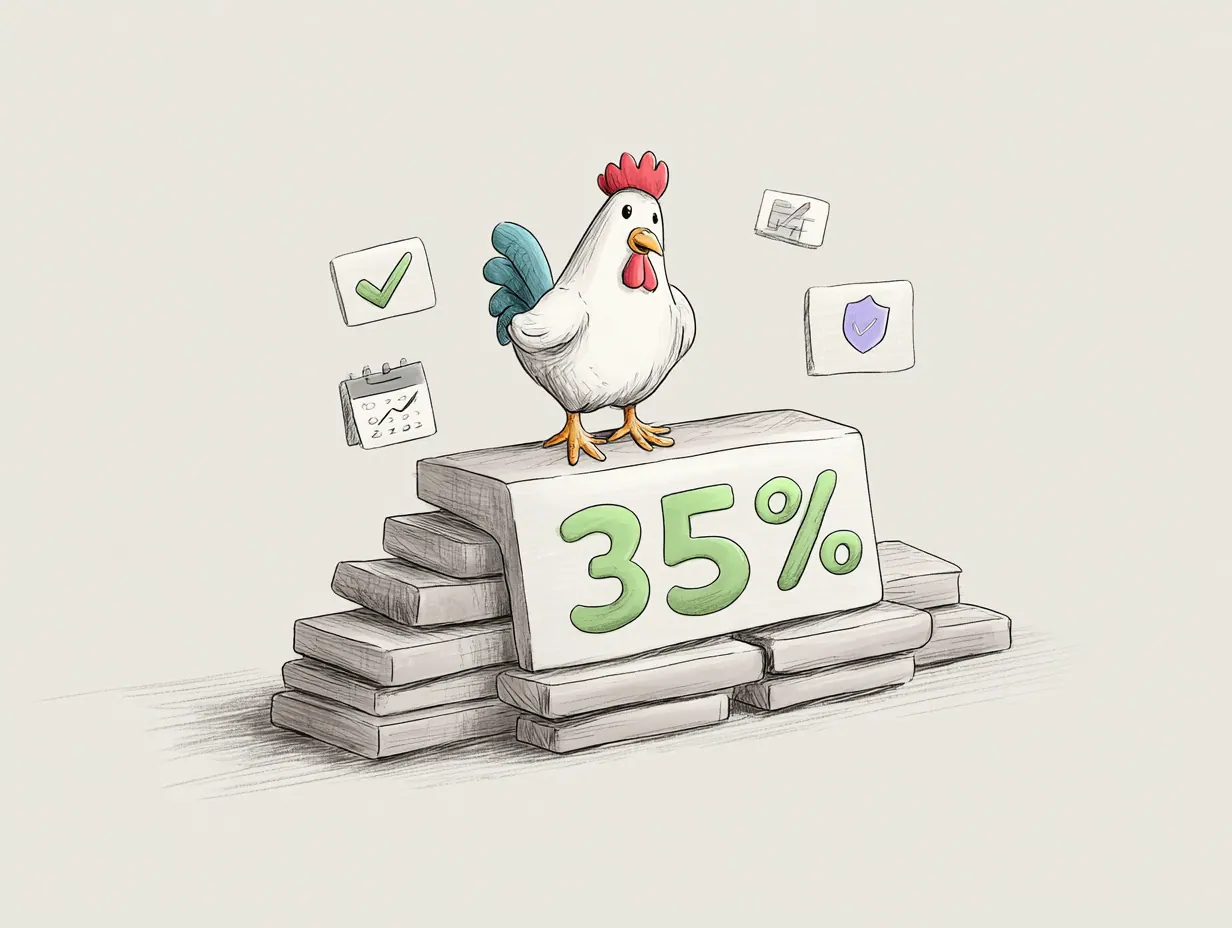
The 35% Rule Action Plan: Master Your Credit Destiny
Here's a quick action plan to help you master the 35% rule and build a strong payment history:
-
Prioritize on-time payments: Set reminders, use autopay, and make paying your bills a top priority.
-
Check your credit report regularly: Review your credit report for errors and dispute any inaccuracies.
-
Consider a secured credit card: If you have limited or damaged credit, a secured card can help you establish a positive payment history.
-
Be cautious with authorized user accounts: While they can provide a boost, they're not a substitute for building your own credit.
-
Address late payments and collections: Don't ignore these issues; take steps to resolve them as soon as possible.
-
Track your progress: Monitor your credit score regularly to see how your efforts are paying off.
Payment Master Plan
- List all monthly bill due dates
- Enable autopay on all accounts
- Sign up for SMS/Email payment reminders
- Review bank statements for successful transfers
Investing in Your Credit Foundation: It Pays Off
Your Credit Report: A Mirror to Your Future
So, take a good look at your credit report. Is your payment history the sturdy foundation you need to support your financial dreams? If not, don't despair. Start today by committing to responsible borrowing and on-time payments. With consistent effort, you can build a strong credit history and unlock a world of financial opportunity. Remember Nico, Riley, and Tina? You've got this. The sticks you use to build your nest matter.
Frequently Asked Questions
1. How much does one late payment hurt my score?
- It depends on your current score, but a single 30-day late payment can drop a good score by over 100 points.
2. Can I remove a late payment from my credit report?
- Generally, no, if it's accurate. However, you can write a "goodwill letter" to the creditor asking for removal if it was a one-time mistake.
3. Do utility bills count towards payment history?
- Usually only if they are unpaid and go to collections, or if you use a service like Experian Boost to report positive payments.
4. How long does a late payment stay on my report?
- Late payments stay on your credit report for seven years from the date of the delinquency.
5. Does paying the minimum amount count as "on time"?
- Yes. As long as you pay at least the minimum due by the deadline, your payment history is safe (though you'll pay interest).
6. Do medical bills affect my payment history?
- Only if they go to collections. Recent laws also prevent paid medical collections from appearing on reports and give a 1-year grace period for unpaid ones.