Key Takeaways
- Secured cards are entry-level credit tools, requiring a deposit that usually matches your credit limit.
- They are ideal for establishing your very first credit history or rebuilding it after past challenges.
- Unlike authorized user (AU) tradelines, secured cards build your own independent payment history.
- Responsible use (on-time payments, low utilization) with a secured card helps you "graduate" to an unsecured card.
- They report to credit bureaus, positively impacting payment history and credit utilization, core components of your credit score.
Laying the Foundation: What is a Secured Credit Card?
Secured credit cards aren't just another financial product; they're a foundational stepping stone, designed specifically for individuals who are starting from scratch or looking to rebuild their credit. Think of them as your first cornerstone in the structure of your credit profile. Unlike traditional, unsecured credit cards where a bank lends you money based on your creditworthiness, a secured card requires you to put down a security deposit. This deposit typically becomes your credit limit, meaning if you deposit $300, your credit limit is $300.
This simple mechanism is brilliant in its design: it minimizes risk for the lender. Should you fail to make payments, the bank can use your deposit to cover the outstanding balance. But here's the crucial part: you're not paying with your deposit directly. You're still making monthly payments for purchases, just like with a regular card. The deposit simply acts as collateral, a promise to the bank that you're serious about managing your credit responsibly.
"My security deposit pays my monthly credit card bill."
You must make separate monthly payments.
Your deposit is held as collateral by the bank and is only used if you default. To build credit, you must pay your bill every month just like a regular card.
Building Your Credit: Why Secured Cards are So Accessible
Why are secured cards considered the easiest way to build credit? The answer lies in accessibility and the direct impact they have on building your own credit history. Because the bank's risk is mitigated by your deposit, approval rates for secured cards are significantly higher, even for those with no credit score or a less-than-stellar financial past. It's an invitation to the credit world, open to almost anyone willing to take that first responsible step.
- Pay your full balance every month to avoid interest
- Keep utilization below 10% ($30 on a $300 limit)
- Choose a card that reports to all 3 credit bureaus
- Miss a payment (it hurts your score significantly)
- Treat the security deposit as a payment method
- Apply for too many cards at once
Strengthening Your Profile: How Secured Cards Build Your Score
The real power of a secured card is how it systematically helps build your credit score, contributing to the most significant factors lenders consider. Your payment history (a whopping 35% of your FICO score) starts strong as you consistently pay your bills on time. Every month you make a payment without missing a beat, you're adding a positive entry to your credit report, building a steady rhythm of responsibility.
Ideal Utilization Example
Should I get a secured card?
Taking the Next Step: Graduating to an Unsecured Card
The ultimate goal of using a secured credit card isn't just to manage it well; it's to outgrow it. Many secured cards offer a 'graduation' path, allowing you to transition to an unsecured credit card after demonstrating responsible use for a set period, typically 6 to 12 months. When you graduate, the bank returns your security deposit, and your card functions like any other traditional credit card. This transition is like a fledgling bird taking its first independent flight, a moment of true credit independence.
Apply & Deposit
Submit app and fund your security deposit.
Use Responsibly
Make small purchases and pay in full.
Build History
6-12 months of on-time payments.
Review Time
Bank reviews account for upgrade.
Graduate
Deposit returned, card becomes unsecured.
Real-Life Scenarios: Building Success
Here's how individuals have used secured cards to build their financial foundations:
- Newcomer Nico: Nico recently moved to the U.S. and needs to build credit from scratch to rent an apartment and get a phone plan in their own name. Nico secured a card with a $250 deposit. For six months, Nico used the card for small, predictable expenses like groceries and streaming subscriptions, paying the full balance every two weeks. After eight months, Nico's bank automatically converted the secured card to an unsecured one, returning the $250 deposit. With this newfound credit history, Nico was able to qualify for a better apartment and a postpaid phone plan, demonstrating that the 'first egg' truly built financial opportunity.
Combining Strategies: Secured Cards vs. AU Tradelines
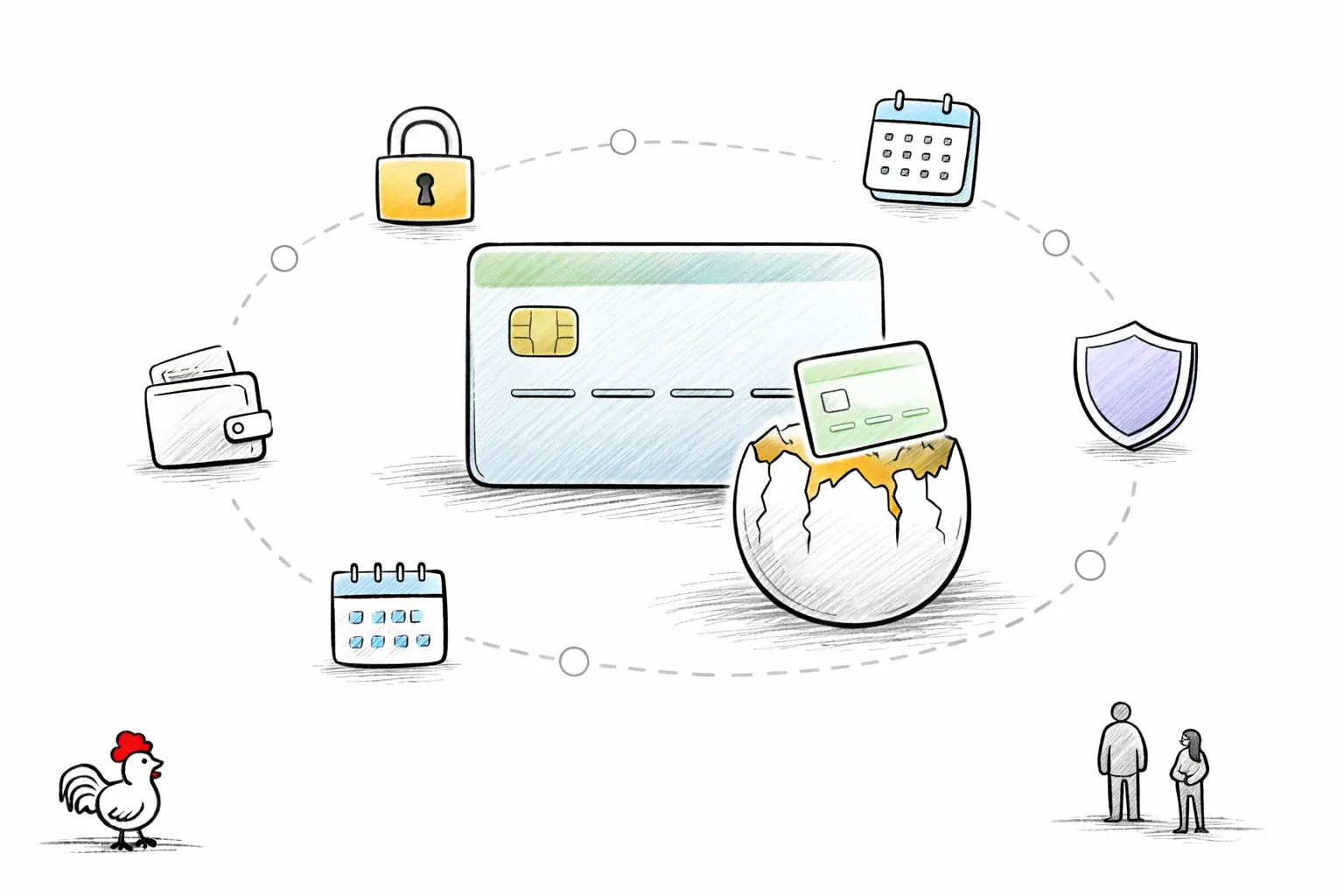
However, it's crucial to understand the distinction: AU tradelines are a powerful gateway for rapid credit visibility, but they don't replace the need to build your own credit habits. Secured cards, on the other hand, are durable builders, forming the core of your personal financial nest. They teach you direct responsibility and create a history that is undeniably yours. Many savvy credit builders use both: an AU tradeline for that initial, swift score lift to open doors, followed by a secured card to cement a strong, independent payment history.
- Rebuilder Riley: Riley had some financial struggles a few years ago, resulting in a low credit score that made getting approved for anything difficult. To get a quick lift, Riley became an authorized user on a trusted family member's old, well-managed credit card. This immediately improved Riley's score visibility. Simultaneously, Riley applied for a secured credit card with a $500 deposit. By combining the quick improvement from the AU tradeline with consistent, on-time payments on the secured card, Riley demonstrated a renewed commitment to financial responsibility, effectively laying new, sturdy foundations in a once-damaged profile.
Disclosure
NoteSome lenders and credit scoring models may filter out, discount, or weigh authorized user tradelines differently in their underwriting decisions. Results vary based on lender policies, the specific scoring model used, and your unique credit profile. An AU tradeline does not guarantee loan approval or any specific credit score outcome.
Choosing Your Feathers: Selecting the Right Secured Card
Choosing the right secured card requires a little research. Look for cards that report to all three major credit bureaus, as this ensures your efforts are recognized universally. While interest rates are less critical if you pay your balance in full each month (which you absolutely should!), watch out for high annual fees. Many excellent secured cards have low or no annual fees.
Also, consider the path to graduation. Some secured cards explicitly state their criteria and timelines for converting to an unsecured card, which is a sign of a strong program. Read the fine print, ask questions, and ensure the card aligns with your long-term credit building goals. Remember, this isn't just about getting a card; it's about setting yourself up for financial success.
What to Look For in a Secured Card
- Reports to all 3 credit bureaus (Essential)
- Low annual fees
- Clear path to graduation (unsecured)
- Financial education tools
- Time-Sensitive Tina: Tina needed a car loan in three months but had a 'thin file', not enough credit history. Knowing she needed both speed and substance, Tina opted for a two-pronged approach. She was added as an authorized user to her aunt's long-standing credit card, providing an immediate boost to her credit report. At the same time, she applied for a secured credit card. By using the secured card responsibly for a few small, recurring bills and diligently paying it off, she rapidly established a positive payment history of her own. This combined strategy allowed her to present a more robust credit profile to the car dealership within her tight timeline.
Ready to take flight and build your credit? Exploring secured card options can be your most straightforward path.
Frequently Asked Questions
1. Can I get a secured card with bad credit?
- Yes, secured cards are specifically designed for individuals with poor credit, limited credit, or no credit history at all. Your deposit makes you a low-risk applicant.
2. How much deposit do I need for a secured card?
- Deposits typically range from $200 to $500, though some issuers may offer higher limits based on a larger deposit. This deposit usually matches your credit limit.
3. Does a secured card report as "secured" on my credit report?
- While some secured cards may be noted as 'secured' on your credit report, this distinction doesn't hinder your credit-building efforts. Lenders still view your payment history and utilization positively.
4. Can I have multiple secured cards?
- Yes, you can. However, it's often more beneficial to focus on managing one or two secured cards exceptionally well rather than juggling many. Spreading your focus too thin can lead to mistakes.
5. What happens if I close my secured card?
- Closing a secured card, especially if it's your oldest account, can potentially impact the average age of your credit accounts, which is a factor in your score. If you graduate to an unsecured card with the same issuer, the account typically remains open, simply changing its status.
6. Do secured cards help me get a mortgage or car loan?
- Yes, by establishing a positive payment history and demonstrating responsible credit utilization, a secured card builds the foundation for larger financial goals like qualifying for a mortgage or car loan.