Key Takeaways
- Revolving Tradelines (like credit cards) offer flexibility, but proper management of credit utilization is crucial.
- Installment Tradelines (like loans) provide a steady payment history over a fixed term, building a strong foundation.
- Authorized User (AU) Tradelines can offer a quick boost in credit visibility by leveraging someone else\'s good history.
- A healthy mix of tradelines is beneficial for your credit score, showing you can manage different types of credit responsibly.
- While AU tradelines are a fast gateway, building your own primary accounts is essential for long-term credit strength and independence.
Revolving Tradelines: The Flexible Framework of Your Credit Nest
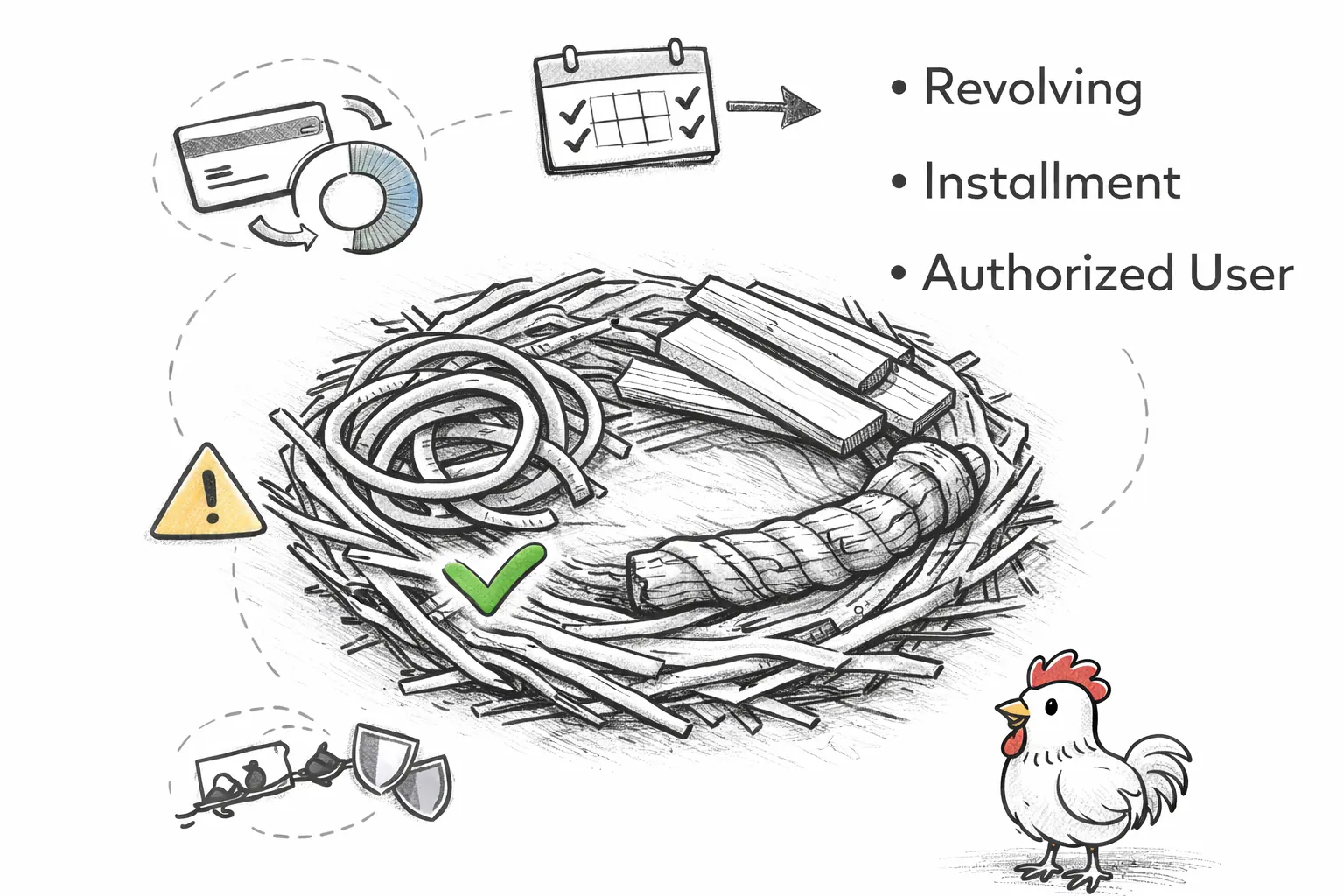
Think of revolving tradelines as the pliable twigs and grasses woven into your nest's structure. They bend without breaking. You can use and reuse them as needed, so long as you maintain them properly. The most common revolving tradelines are credit cards and lines of credit. With these accounts, you receive a credit limit and can borrow up to that amount, pay it back, and borrow again. There's no fixed end date. Your minimum payment fluctuates based on how much you owe.
Mastering Credit Utilization in Revolving Accounts
Installment Tradelines: The Sturdy Branches That Anchor Your Roost
Revolving vs. Installment: At a Glance
| Feature | Revolving Credit | Installment Credit |
|---|---|---|
| Common Examples | Credit Cards, Lines of Credit | Auto Loans, Mortgages |
| Flexibility | Borrow & Repay repeatedly | One-time lump sum |
| End Date | None (Open-ended) | Fixed Term (e.g., 5 years) |
| Utilization Impact | High impact on score | Minimal impact on score |
Primary vs. AU: Understanding the Weight of Your Nesting Materials
Building a Diverse Roost: Scenarios in Action
Here's how different tradelines might come together for different individuals:
-
Nico, the Newcomer: Nico has a thin credit file and needs to build credit from scratch. His first step is to become an authorized user on a trusted family member's long-standing credit card with excellent payment history and low utilization. This quickly establishes some credit visibility. Simultaneously, he applies for a secured credit card (a revolving tradeline) in his own name. After a few months of diligent use and on-time payments, he considers a credit-builder loan (an installment tradeline) to diversify his credit mix and further solidify his payment history. Setting up AutoPay ensures he never misses a due date. This strategic layering ensures he gets fast visibility while building durable, primary accounts.
-
Riley, the Rebuilder: Riley had some financial struggles a few years ago, resulting in a damaged credit report. To stabilize and rebuild, she starts with a credit-builder loan (installment) to prove consistent, positive payments. Once she's established a few months of flawless payment history, she adds a secured credit card (revolving) to demonstrate responsible revolving credit management and keep her utilization low. She avoids being an authorized user, preferring to focus entirely on rebuilding her own primary accounts and showing her independence.
-
Maya, the Time-Sensitive Applicant: Maya needs to qualify for an apartment lease quickly but has very little credit history. Her immediate focus is on an authorized user tradeline to get some positive history on her report within a few weeks. She understands this is a short-term gateway for visibility and immediately plans to open a secured credit card to start building her own primary revolving history for long-term growth.
Which tradeline should you open next?
Your Path to a Stronger Nest: Choosing Your Tradelines Wisely
Action Items
- Understand the three main types of tradelines: Revolving, Installment, and Authorized User.
- Strategically choose the right tradelines that align with your personal credit-building goals.
- Manage your primary accounts responsibly by maintaining low credit utilization and making all payments on time.
- Consider authorized user tradelines as a valuable kick-start for credit visibility, but actively work towards building your own primary accounts.
- Leverage powerful tools like secured credit cards and credit-builder loans to establish a strong, independent credit foundation.
A skilled bird knows which materials to gather for a safe roost. Similarly, understanding the different types of tradelines helps you construct a credit report that supports your financial goals. Flexible revolving credit, sturdy installment foundations, a gifted AU branch. Each one contributes to the strength of your financial nest. Keep learning, keep building.
Frequently Asked Questions
1. What are the main types of tradelines?
- The three main types of tradelines are Revolving, Installment, and Authorized User (AU) tradelines. Each plays a distinct role in shaping your credit report and demonstrating your creditworthiness.
2. What is a revolving tradeline?
- A revolving tradeline is a credit account that allows you to borrow up to a certain limit, repay it, and then borrow again. There's no fixed end date for repayment. Common examples include credit cards and lines of credit. Your credit utilization (the amount you owe vs. your credit limit) is a significant factor in how these accounts impact your score.
3. What is an installment tradeline?
- An installment tradeline is a loan where you borrow a fixed amount of money and repay it over a set period with fixed monthly payments. Once the loan is paid off, the account closes. Examples include car loans, student loans, mortgages, and credit-builder loans. Consistent, on-time payments are crucial for building a positive history with installment tradelines.
4. How do Authorized User (AU) tradelines work?
- An Authorized User (AU) tradeline means you are added to someone else's existing credit card account. While you can use the card, the primary account holder is responsible for payments. The account's positive history (payment history, credit limit, age) can then appear on your credit report, offering a fast way to gain credit visibility, especially for those with a thin file. However, AU accounts are generally weighed differently than primary accounts by credit scoring models.
5. Do primary tradelines carry more weight than AU tradelines?
- Yes, primary tradelines (accounts opened in your own name where you are responsible for the debt) generally carry more weight in credit scoring than Authorized User (AU) tradelines. Primary accounts directly demonstrate your individual ability to manage credit. While AU tradelines are beneficial for visibility, building your own primary accounts is key for long-term, durable credit strength. Different credit scoring models may also weigh AU data differently.
6. Why is a mix of different tradelines important?
- A healthy mix of different tradelines (revolving and installment) demonstrates your ability to responsibly manage various types of credit. This 'credit mix' is a factor in your credit score and shows lenders you are a versatile and reliable borrower, contributing to a more robust and resilient credit profile. For more credit terms, explore our Credit Glossary.
Disclaimer: The information provided in this article is for educational purposes only and does not constitute financial, legal, or professional advice. Credit reporting practices and scoring models may change over time. Please consult a qualified professional for personalized guidance.