Key Takeaways
- Each hard inquiry can slightly ding your credit score for up to a year.
- A cluster of inquiries suggests financial instability or desperation to lenders.
- Strategically space out credit applications to minimize negative impact.
- Understand the difference between a hard pull (affects score) and a soft pull (does not).
- Utilize the Rate Shopping Rule for certain loan types, which groups multiple inquiries into one for scoring purposes.
The Anatomy of a Hard Inquiry: What Happens When Lenders Peek?
You see, every time you formally apply for new credit, whether it’s a credit card, a personal loan, a car loan, or a mortgage, the lender will typically perform what's known as a hard inquiry (or a 'hard pull') on your credit report. This is a deep dive into your financial history, pulling up details about your payment habits, existing debts, and overall creditworthiness.
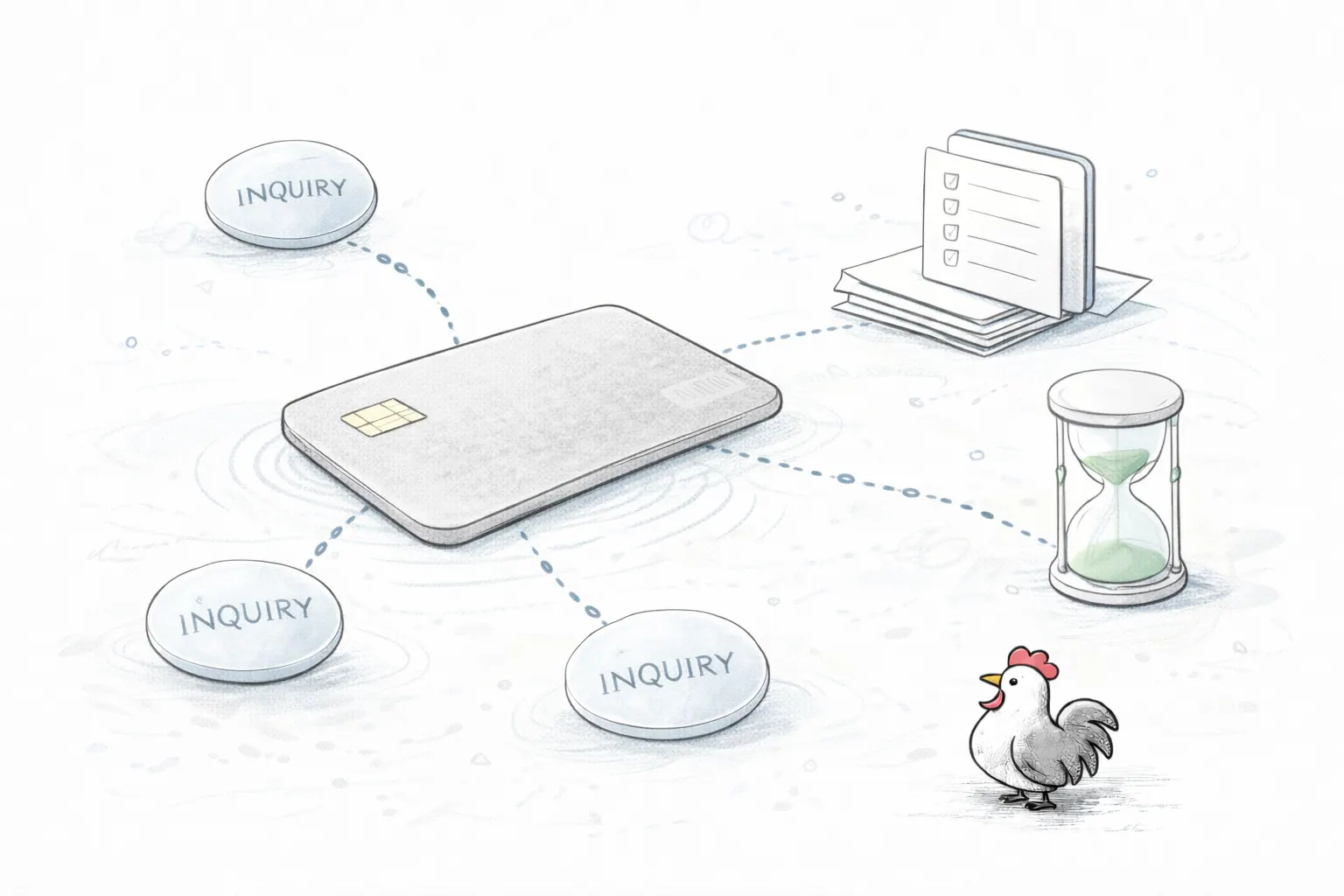
Hard Inquiry
A formal request by a lender to review your full credit report when you apply for new credit, such as a credit card, loan, or mortgage. It is recorded on your credit report and can temporarily lower your credit score.
credit applications
The Peck on Your Score and Its Lingering Tale
What happens when a hard inquiry lands on your report? Think of each inquiry as a tiny, temporary peck on your credit score's foundation. A single hard inquiry usually causes a small, temporary dip in your FICO Score, typically by 1-5 points. While this might seem negligible on its own, the impact goes beyond the numerical dip. It also shapes the narrative future lenders see about you.
"Hard inquiries destroy your credit score."
A single inquiry typically costs 1-5 points and fades in 12 months.
While multiple inquiries can signal risk, the impact of one or two is minor and temporary.
New Credit accounts for only 10% of your score. This is where hard inquiries live. While significant when clustered, a single inquiry has minimal impact on your overall credit health.
Why Lenders Get Spooked: A Flurry of Pecks Raises Red Flags
From a lender's perspective, a flurry of hard inquiries is like seeing multiple birds aggressively trying to build too many nests at once, or perhaps one bird suddenly rushing to fortify a crumbling roost. It raises a red flag. Lenders use hard inquiries as one piece of the puzzle to assess risk. If they see that you've applied for five credit cards in the last three months, they might assume:
- You're in financial distress: Perhaps you need money urgently and are being denied elsewhere, or you're trying to max out multiple cards.
- You're about to take on too much debt: Opening several new credit lines dramatically increases your potential debt load, even if you haven't used them yet. This makes your existing debt look riskier.
- You're 'credit hungry': A borrower constantly seeking new credit might be perceived as less responsible or more likely to default.
These assumptions can lead to higher interest rates, lower credit limits, or outright denial of your application. Lenders prefer to see a measured, strategic approach to credit, not a frantic grab for every available twig.
Financial Distress
Urgently seeking credit
Debt Load Risk
Too many new credit lines
Credit Hungry
Perceived as irresponsible
Higher Denials
Reduced approval odds
The Rate Shopping Rule: A Forgiving Forest for Major Purchases
Here is where things get a bit more forgiving. Not all multiple inquiries are treated equally. The Rate Shopping Rule is a crucial protection designed to prevent your score from being unfairly penalized when you are simply trying to find the best deal on a major loan.
Day 1
Apply for first mortgage quote
Day 10
Apply at two more lenders
Day 20
Review all offers
Day 30
All inquiries count as one
Strategically Building Your Nest: How to Minimize Inquiries
How do you navigate this dilemma and expand your credit nest without spooking the forest? The key is strategic application and thoughtful spacing.
-
Space Out Credit Card Applications: For revolving credit like credit cards, there is no rate shopping protection. Space out your applications. If you are looking for a new credit card, consider applying for one every 3-6 months. This gives your score time to recover from the previous inquiry and allows your new account to start building a positive payment history, which may help offset the initial ding.
-
Know Your 'Why': Before applying for any new credit, ask yourself: Why do I need this now? Is it to build credit (perhaps your first secured card), consolidate debt, or finance a specific purchase? Having a clear purpose helps you avoid impulsive applications.
-
Research First: Before you even apply, understand the likelihood of approval. Many credit card companies offer pre-qualification tools that let you see if you're likely to be approved without a hard inquiry (this is a soft pull!). This can save you from unnecessary hard inquiries for cards you won't qualify for.
-
Leverage Your Existing Credit: If you're looking for more credit, sometimes a credit limit increase on an existing card can be requested with a soft inquiry. Check with your issuer.
-
Build Your Foundation First: Especially for newcomers, focus on foundational credit-building tools like secured credit cards and consistent on-time payments before diving into multiple credit card applications. These build your payment history without piling on inquiries from multiple simultaneous applications.
- Space applications 3-6 months apart
- Use pre-qualification (soft pull) first
- Rate shop within 14-45 days for loans
- Ask for credit limit increases
- Apply for multiple cards in one week
- Open new credit before major purchases
- Ignore your approval odds
- Forget about the Rate Shopping Rule
Real-Life Scenarios: Understanding the Impact
Let's illustrate this with a few scenarios:
-
Nico, the Newcomer: Nico is eager to build credit fast after getting an Authorized User (AU) tradeline, which gave him his initial credit visibility. He sees several tempting credit card offers and applies for three different cards in a single week, hoping to get at least one. Each application results in a hard inquiry. Because these are credit cards, the rate shopping rule doesn't apply. Suddenly, his credit report shows three new inquiries in a week, making him look financially desperate. He gets denied for two cards and approved for only one, with a low limit. The multiple inquiries slightly lower his score, and the denials don't help. He would have been better off applying for one card, waiting a few months, and then applying for another if needed.
-
Riley, the Rebuilder: Riley had some past financial missteps and is now diligently making on-time payments. He needs a new car and wants to find the best financing. He visits three different dealerships and applies for financing at each, resulting in three hard inquiries from different lenders. Because these are all auto loans and he applies within a 30-day window, the credit bureaus treat these as one inquiry for scoring purposes. Riley is able to compare offers and choose the best one without his score being unduly penalized. If he had then immediately applied for a new credit card, that would be a separate, additional inquiry.
-
The Time-Sensitive Homebuyer: Sarah is pre-approved for a mortgage but wants to quickly open a new store credit card for a furniture purchase for her new home. She applies for the store card a week before her mortgage closing. The hard inquiry for the store card, along with the potential for new debt, could cause her mortgage lender to re-evaluate her application, potentially delaying closing or even altering her loan terms. Mortgage lenders are highly sensitive to any new credit activity before closing. It's best to hold off on any new credit applications during this critical window.
Which approach matches your situation?
Newcomer
Building credit for the first time
Rate Shopper
Comparing loan offers
Pre-Mortgage
About to close on a home
Hard vs. Soft Pulls: Knowing the Difference Empowers Your Credit Journey
Understanding soft versus hard pulls makes a real difference. A soft pull (or soft inquiry) occurs when a person or company checks your credit report without you formally applying for new credit. This happens when:
- You check your own credit score or report.
- Lenders pre-approve you for offers (like those unsolicited credit card mailers).
- Employers conduct background checks.
Soft pulls do not impact your credit score and are not visible to other lenders. They are like a casual glance at your nest from a distance. A hard pull, as discussed, is a formal request for your full credit report when you apply for new credit, and it does impact your score. Knowing the difference empowers you to manage your credit-building journey with confidence.
Action Items
- Space out credit card applications to 3-6 months apart.
- Before applying, understand why you need new credit.
- Utilize pre-qualification tools to avoid unnecessary hard inquiries.
- Consider requesting a credit limit increase on existing cards (often a soft inquiry).
- Focus on foundational credit-building tools like Credit Builder Loans and Rent Reporting first.
- Avoid new credit applications during critical financing periods, like before a mortgage closing.
Discloure
ImportantSome lenders and credit scoring models may filter out, discount, or weigh authorized user tradelines differently in their underwriting decisions. Results vary based on lender policies, the specific scoring model used, and your unique credit profile. An AU tradeline does not guarantee loan approval or any specific credit score outcome.
Frequently Asked Questions
1. What is a hard inquiry?
- A hard inquiry (or hard pull) is a formal request by a lender to view your full credit report when you apply for new credit, such as a credit card, loan, or mortgage. It signals you're actively seeking new debt.
2. How long does a hard inquiry stay on my credit report?
- Hard inquiries remain on your credit report for two years, though their impact on your credit score typically fades after about 12 months.
3. How much does a hard inquiry lower my credit score?
- A single hard inquiry usually causes a small, temporary dip in your FICO Score, typically by 1-5 points. However, a cluster of inquiries can signal higher risk to lenders.
4. What is the "Rate Shopping Rule"?
- The Rate Shopping Rule allows multiple hard inquiries for the same type of installment loan (like a mortgage, auto, or student loan) within a specific timeframe (e.g., 14-45 days) to be treated as a single inquiry for scoring purposes.
5. Does the Rate Shopping Rule apply to credit card applications?
- No, the Rate Shopping Rule generally applies to installment loans and does not protect revolving credit applications like credit cards. Each credit card application typically results in a separate hard inquiry.
6. What's the difference between a hard pull and a soft pull?
- A hard pull occurs when you apply for new credit, impacts your score, and is visible to other lenders. A soft pull happens when you check your own credit, or lenders pre-screen you, and it does not impact your score or appear to other lenders.
7. Why do lenders get spooked by multiple hard inquiries?
- Multiple hard inquiries in a short period can suggest to lenders that you are in financial distress, desperate for credit, or about to take on more debt than you can handle, making you a higher-risk borrower.