Key Takeaways
- Older accounts demonstrate greater financial trustworthiness to lenders.
- Just like tall trees take years to grow, a long credit history develops over time.
- Strategically keeping older credit cards open, even if rarely used, is crucial for preserving your history.
- The average age of your accounts contributes to this factor, so new accounts can temporarily lower it.
- Patience is fundamental, but combining it with good habits in other credit factors is key to overall credit health.
Why Time Is Money: The Value of a Long Credit History
You might wonder why time, simply ticking by, holds so much weight in your financial story. The length of your credit history is a crucial component because it offers lenders a panoramic view of your financial behavior over an extended period. Think of it this way: would you rather lend money to someone with a six-month track record or someone with a ten-year track record, both of whom have paid on time?
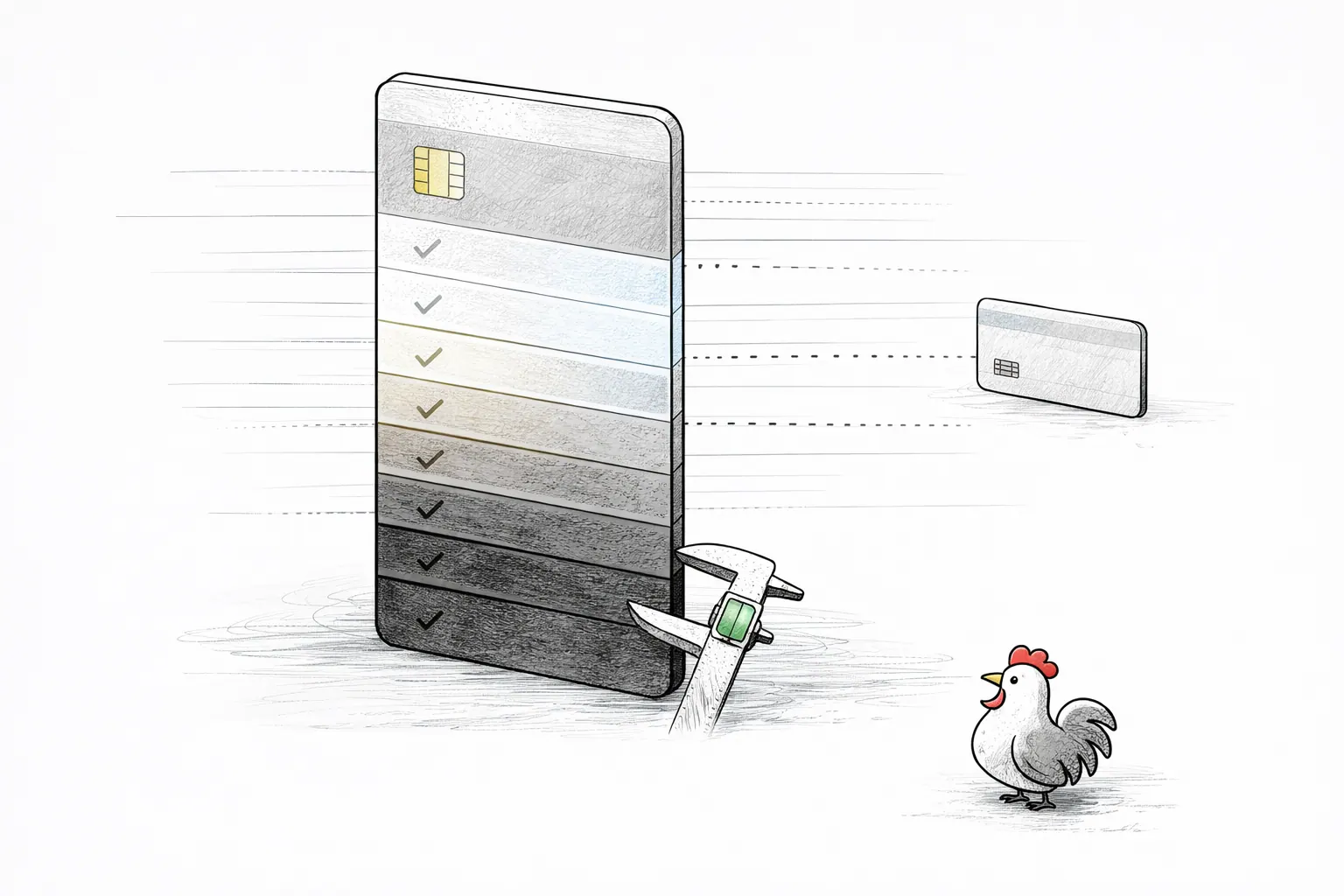
Lenders, much like meticulous ornithologists observing a nest, look for established patterns. A longer history typically means more data points reflecting responsible credit use. Conversely, it provides a longer period to recover from past missteps. It includes several key elements:
- Age of your oldest account: This is typically the primary driver. The older your first line of credit, the better.
- Age of your newest account: While opening new accounts is sometimes necessary, a very young 'newest account' can slightly pull down your average.
- Average age of all your accounts: This is the collective age of all your open credit lines, averaged out.
- Length of time specific credit accounts have been open: Lenders also consider the individual age of your revolving credit (credit cards) and installment loans (mortgages, car loans).
This factor is FICO's way of valuing commitment and consistency. It’s not just about what you’ve done, but how long you’ve been doing it. Just as tall trees take years to grow and old branches provide the sturdiest nests, a long credit history steadily reinforces your financial reputation, making you a more attractive borrower.
That steady influence sets the stage for how new accounts ripple through your average age.
The Ripple Effect: New Accounts and Your Average Age
The impact of having older accounts is straightforward: older accounts equal more trust. Imagine two potential borrowers. One has a credit card opened six months ago with perfect payments. The other has a credit card opened fifteen years ago, also with perfect payments. Who do you think a lender would perceive as more reliable? The individual with the longer history demonstrates sustained responsibility through various life stages and economic climates.
This factor considers both the absolute age of your oldest account and the average age of all your active credit lines. When you open a new account, it effectively lowers this average, at least temporarily. For example, if you have one credit card that is ten years old, your average age of accounts is ten years. If you then open a brand-new credit card, your average immediately drops to five years (10 + 0 / 2 = 5). This isn't a reason to avoid new credit entirely. However, it explains why you often see a slight dip in your score after opening a new account. This drop isn't necessarily from the hard inquiry alone, but rather the lowering of your average account age.
This delicate balance is why strategic planning is so important. You want to show growth and a healthy mix of credit, but you also want to protect the established foundation of your oldest accounts. It's about nurturing your existing, sturdy branches while occasionally adding new, promising shoots.
A simple timeline makes the trade-off easier to visualize before you add a new account.
New account phase
Average age dips as the newest account posts and begins reporting.
Stabilizing period
On-time payments start to offset the initial age hit.
Seasoned profile
Older accounts anchor your average age and support lender confidence.
That quick dip and slow recovery is why the math below matters.
The Golden Rule: Why Keeping Old Cards Open Matters
Given that older accounts build more trust, it logically follows that keeping older cards open when reasonable is a cornerstone of maintaining a healthy credit history. Many people consider closing old credit cards they no longer use, perhaps to simplify their finances or avoid annual fees. While there can be valid reasons to close an account, doing so without careful consideration can shorten your credit history and potentially impact your score.
"Closing old cards always helps your score."
Keeping seasoned accounts open protects your history and utilization.
Older accounts keep your average age higher and preserve available credit, both of which support stronger scores.
Therefore, unless an old card has an exorbitant annual fee you can't justify, or you're struggling with self-control, it's often wise to keep it open. Use it occasionally for a small, easily paid-off purchase to keep it active, or consider downgrading it to a no-annual-fee version if available. For a deeper dive into this decision, you can refer to our guide on Should You Close Old Credit Cards?. Remember, every year an account stays open, it adds another year to your valuable credit narrative.
The Long Game: Patience and the 15% Factor
It's essential to approach the length of credit history with a dose of patience and realism. This factor, while significant at 15%, is largely a waiting game. You can't fast-track the aging process of your accounts. This isn't a factor where you can make a quick payment and see an immediate jump, unlike payment history or utilization.
Authorized User (AU) Tradeline
A credit account where you are added as an authorized user, allowing the account's history to appear on your credit report, which can support your credit history length.
Used as a fast gateway for newcomers to gain visible credit history.
Disclosure
ImportantSome lenders and credit scoring models may filter out, discount, or weigh authorized user tradelines differently in their underwriting decisions. Results vary based on lender policies, the specific scoring model used, and your unique credit profile. An AU tradeline does not guarantee loan approval or any specific credit score outcome.
Keep that disclosure in mind as we look at real-world timelines below.
Real-Life Scenarios: The Impact of Time on Your Credit
Let's look at how the power of patience, or the lack thereof, plays out for different individuals navigating the credit landscape.
-
Nico, the Newcomer: Nico just turned 18 and is excited to start building his credit. He’s heard about authorized user tradelines and wisely decides to explore adding one to his report. By becoming an authorized user on his aunt's well-aged credit card (opened 12 years ago), Nico can gain an established account on his credit report, helping him build visible credit history faster than starting from scratch. It can be a faster gateway to visibility. He then follows up by opening a secured credit card and paying it diligently. While the tradeline can give his file an early age lift, it's his own secured card, kept open for years, that will truly build his own long-term credit history, year after year.
-
Riley, the Rebuilder: Riley had some financial struggles a few years back, and a couple of old credit cards were closed with negative marks. Now, she's back on track, making all her payments on time. She has one credit card that miraculously stayed open for 15 years, even through her tough patch, and another newer card that's 3 years old. Riley's credit score is slowly improving because she's making perfect payments, but the length of her oldest positive account, the 15-year-old card, is a bedrock. She makes sure to keep that card active with a small purchase now and then, recognizing its immense value to her average age of accounts and overall credit length. Her patience in maintaining that one old positive account is paying dividends as time passes.
-
Jane, the Homebuyer: Jane is preparing to apply for a mortgage in six months. She has a decent credit score, but her average age of accounts is only five years, as she closed a couple of older cards a few years ago when she thought she wouldn't need them. Now, she wishes she hadn't. Jane understands she can't instantly age her accounts. Instead, she focuses on maximizing the other credit factors within her control: ensuring flawless payments, keeping her utilization extremely low (even paying down balances multiple times a month), and avoiding any new credit inquiries. She accepts that her history length is what it is for now, but by optimizing everything else, she puts herself in the best possible position for her upcoming mortgage application. Patience has to work hand-in-hand with proactive management of other credit score components.
Actionable Takeaways: Nurturing Your Credit History
Nurturing the length of your credit history requires a long-term perspective and consistent good habits. Here are the core practices to keep your history growing:
- Keep your oldest credit card accounts open
- Use old cards occasionally to prevent inactivity closure
- Space out new credit applications
- Monitor your "Average Age of Accounts"
- Close your oldest account "just because"
- Open multiple new cards in a short window
- Forget about unused old accounts
- Close cards right before a mortgage application
A key metric lenders watch is your Average Age of Accounts (AAoA).
Average Age of Accounts (AAoA)
A metric calculated by taking the sum of the ages of all your credit accounts and dividing it by the total number of accounts.
This is the primary way lenders measure the "seasoning" of your credit profile.
The Marathon, Not the Sprint: Building Durable Credit
The journey to a strong credit profile is a marathon, not a sprint. While some factors offer immediate gratification, the length of your credit history rewards those who commit to the long game. It's a silent testament to your financial discipline, growing more robust and influential with each passing year.
Planting the Seed
Open your first account early and keep it in good standing.
The 5-Year Reach
Entering the "Fair" category for history length.
The 10-Year Milestone
Your oldest account now provides a strong "Seasoned" foundation.
Long-Term Legend
Maintaining accounts for 15+ years for optimal credit profile results.
If you want a fast gut-check before making changes, run through this quick list.
Credit History Quick Check
- Is your oldest card still open and active?
- Have you avoided new accounts in the last 3 to 6 months?
- Are you keeping utilization low on existing cards?
- Have you reviewed your credit report for account age accuracy?
Use these milestones and checks as checkpoints before diving into the FAQs.
Frequently Asked Questions
1. How much does the length of credit history affect my credit score?
- The length of your credit history accounts for approximately 15% of your FICO credit score. This factor reflects the age of your oldest credit account, the age of your newest account, and the average age of all your accounts.
2. Why is a longer credit history better for my score?
- A longer credit history demonstrates to lenders that you have a sustained track record of managing credit responsibly over time. It shows consistency and reliability, making you a less risky borrower. Older accounts with good payment histories contribute significantly to a higher score.
3. Should I close old credit cards to simplify my finances?
- Generally, it's advisable to keep old credit cards open, especially if they have a long history and a good payment record. Closing an old account can reduce your average age of accounts and decrease your total available credit, which may negatively impact your credit utilization ratio and, consequently, your score. Only consider closing accounts with high annual fees or if you struggle with self-control.
4. How does opening new credit accounts affect the length of my credit history?
- When you open a new credit account, it becomes your 'newest account,' and it also lowers the 'average age of all your accounts.' This can cause a temporary dip in your credit score, as the overall 'length of credit history' factor is slightly diluted. It's often best to space out new credit applications.
5. Can an authorized user tradeline help improve my credit history length?
- Yes, becoming an authorized user on an established, well-aged credit card can add that account's history to your credit report, potentially providing an early lift to the reported length of your credit history. This can be a fast gateway to visible credit for newcomers, though true long-term history is built with your own accounts over time. Note that some lenders may weigh authorized user accounts differently than primary accounts.
6. What is the role of patience in building a strong credit history length?
- Patience is fundamental because the length of your credit history is built over time. You cannot fast-track the aging process of accounts; consistent, responsible credit use over many years is key to strengthening this factor.
Just as a bird’s nest becomes stronger and more secure with each passing season, anchored by ever-sturdier branches that have weathered many storms, your credit profile gains immeasurable strength with age. The power of patience, reflected in the length of your credit history, isn't about magical quick fixes; it's about the steady, reliable march of time combined with your consistent, good financial habits. Nurture your financial tree, tend to its branches, and watch as your credit nest grows into a truly impenetrable home for your financial future.