Key Takeaways
- Your statement closing date, not your due date, determines the balance reported to credit bureaus.
- Paying down your balance before your statement date is key to showing low credit utilization.
- Lower reported utilization can positive impact your credit score, often more than just paying by the due date.
- Aim for single-digit utilization (1-9%) on your statements for optimal score impact, rather than just staying under 30%.
- Combine strategic payment timing with other credit-building tools like secured cards and credit-builder loans for durable financial health.
The Invisible Dance of Dates: Statement vs. Due
"Paying on the due date is the best thing for my score."
The statement date determines the balance reported to bureaus, affecting utilization well before the due date.
Think of it this way: your due date is when you must deliver the promised materials to keep your nest intact. Your statement date is when an inspector comes by to see how full your nest currently is. You want that inspector to see a well-managed, not overflowing, home. If you wait until the due date to pay a large balance, that large balance will likely have already been reported on your statement date, negatively impacting your utilization ratio for that month.
To illustrate, let’s say your credit card has a $1,000 limit. You’ve spent $500 throughout the month. Your statement closes on the 15th of the month, and your payment is due on the 10th of the following month. If you wait until the 9th of the next month to pay off that $500, the credit bureaus will have already received a report on the 15th showing you used 50% of your available credit ($500/$1,000). That’s a high utilization! But if you pay that $500 before the 15th (say, on the 12th), your statement could close with a $0 balance, or a much lower one, and that’s what gets reported. This is exactly how you "top off the nest before neighbors inspect," ensuring your credit profile looks its best.
The Art of Pre-Statement Payment: Lowering Your Reported Balances
The strategy is simple but requires a shift in mindset: aim to pay down your credit card balance before your statement closing date. This allows your issuer to report a lower (or even zero) balance to the credit bureaus, which directly translates to a lower credit utilization ratio. And a lower utilization ratio almost always means a higher credit score.
Is your Statement Closing Date within the next 3 days?
Here’s how to put this into practice:
- Find Your Statement Date: Look at your credit card statement or log into your online account. You'll see a 'statement closing date' or 'billing cycle end date'. Mark this on your calendar. This date often stays the same month-to-month, but it's good to double-check.
- Monitor Your Spending: Throughout your billing cycle, keep an eye on how much you're spending. Don't let your balance creep too high, especially as you approach the statement date.
- Make Mid-Cycle Payments: Instead of waiting for the due date, make a payment (or multiple payments) a few days before your statement is scheduled to close. This doesn't have to be the full balance; even paying down a significant portion can make a big difference.
For example, if your credit limit is $2,000 and you’ve charged $1,000, your utilization is 50%. If your statement closes on the 20th of the month, you could make a $900 payment on the 17th. When your statement closes on the 20th, it will only show a $100 balance ($100/$2,000 = 5% utilization), which is much more favorable than 50%. You then just pay the remaining $100 before the actual due date.
Cycle Starts
Spending period begins.
Strategic Payment
Pay balance down to 1-9% BEFORE statement closes.
Statement Closes
Issuer reports this low balance to bureaus.
Due Date
Pay any remaining small balance to avoid interest.
Beyond the 30% Rule: The Power of Single-Digit Utilization
Credit scoring models tend to reward individuals who demonstrate very low utilization, ideally in the 1-9% range. Why? Because it signals to lenders that you have plenty of available credit and aren't reliant on credit to get by. It suggests financial stability and a low-risk profile. Imagine a bird's nest that's sturdy but not overflowing with materials; it's robust, yet clearly well-maintained and not stressed.
Consistently reporting single-digit utilization shows creditors that you manage your credit responsibly, use it when necessary, but are never close to maxing out your limits. This makes you a more attractive borrower, potentially leading to better interest rates on loans, higher credit limits, and easier approval for new accounts.
Sometimes, reporting zero utilization isn't always the absolute best for your score, as some models like to see some activity. Reporting a tiny balance (like 1%) is often considered the 'sweet spot' for score optimization. This allows you to show active, responsible use without looking like you’re relying heavily on your credit.
Real-World Scenarios: Nico, Riley, and the Timely Payer
Let’s see how this strategic payment timing plays out for different individuals building or rebuilding their credit nests.
Low Utilization Routine
- Find your statement closing date
- Set a reminder 3 days prior
- Pay balance down to 1-9%
- Pay remaining balance by due date
- Time-Sensitive Tasha: Tasha is applying for a mortgage in three months and needs her credit score to be as high as possible to secure the best interest rate. She has several credit cards, but one in particular tends to have a higher balance. She quickly adopts the pre-statement payment strategy. For the next three cycles, she ensures all her cards report minimal balances, paying them down significantly a week before each statement date. This proactive approach helps push her scores into the optimal range just in time for her mortgage application, potentially saving money on interest over the life of the loan. Her diligence ensures her nest looks impeccable for the biggest inspection of all.
Payment Timing Scenarios
The Newcomer (Nico)
New card, $500 limit. Spends $250 (50%).
The Rebuilder (Riley)
High utilization dragging score down.
Mortgage Prep (Tasha)
Needs peak score for loan application.
Potential Pitfalls and Practical Tips
While highly effective, implementing this strategy requires a bit of awareness:
- Don't Forget the Due Date: Even with pre-statement payments, always ensure your minimum payment (at least) is made by the actual due date to avoid late fees and negative marks on your payment history.
- Consider a Small Reported Balance: As mentioned, sometimes reporting a very small balance (1-2%) is better than 0% for some scoring models, as it shows active, responsible use. If you pay everything off before the statement closes, you might report 0% utilization, which is still excellent but potentially not peak optimization for every model.
- Automate Reminders: Set up calendar alerts a few days before each card's statement closing date to review your balance and make a strategic payment. Most credit card apps also allow you to see your current balance easily.
- Don't Overextend: This strategy helps report low utilization, but it doesn't mean you should spend more than you can afford. Always ensure you can comfortably pay off the balance you're accumulating.
- Multiple Cards: If you have several cards, spread your spending, or apply this strategy to your cards individually to ensure overall low utilization.
- Pay strategic balance before statement date
- Set calendar alerts
- Keep small balance (1%) for activity
- Wait until due date for large balances
- Spend more than you can repay
- Report 0% on every single card forever
Next Steps for a Stronger Nest
Mastering the timing of your credit card payments to optimize your utilization ratio is a smart, powerful move for anyone looking to improve their credit score. It’s a habit that directly impacts a significant portion of your score and can yield tangible results relatively quickly.
By combining the strategic timing of your credit card payments with these foundational credit-building tools, you’re not just managing your credit, you're intelligently crafting a future of financial strength and opportunity.
Disclosure
NoteSome lenders and credit scoring models may filter out, discount, or weigh authorized user tradelines differently in their underwriting decisions. Results vary based on lender policies, the specific scoring model used, and your unique credit profile. An AU tradeline does not guarantee loan approval or any specific credit score outcome.
Building Your Sky-High Roost
As we’ve explored, the precise moment you choose to pay your credit card bill can have a profound impact on your credit score. It's not just about meeting deadlines, but about strategically managing the impression your financial nest makes on those who assess its strength. By understanding the critical role of your statement date and making pre-statement payments, you gain control over your credit utilization, setting the stage for a healthier, more robust credit profile.
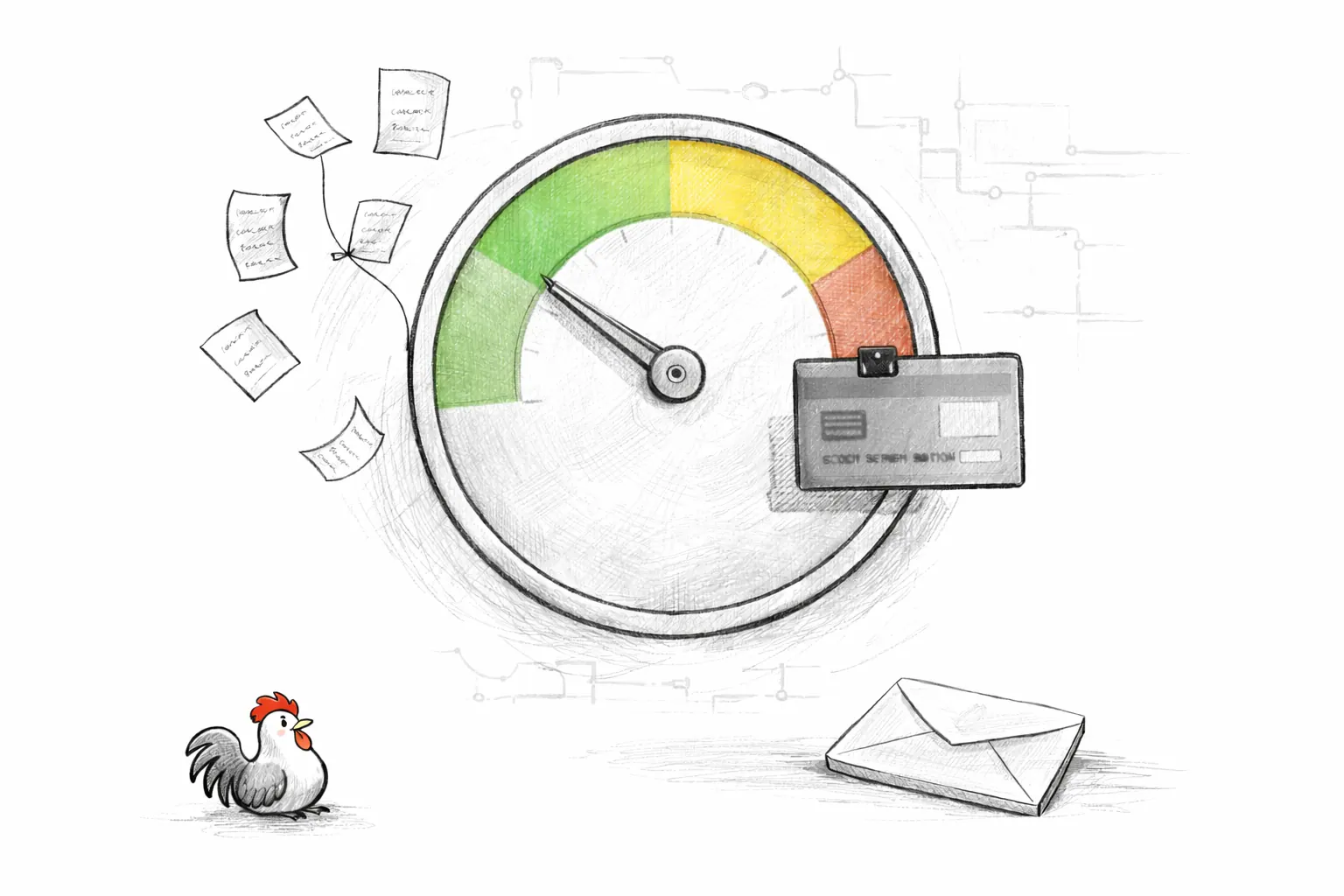
Remember Nico, Riley, and Tasha, each, by understanding and acting on this secret, took a significant step towards their financial goals. You, too, can use this knowledge to prepare your nest beautifully, not just for the daily calm but for the grand opportunities ahead. Keep building, keep learning, and watch your credit profile grow!
Frequently Asked Questions
1. What's the difference between statement date and due date?
- Your statement date is when your credit card issuer closes your billing cycle and reports your balance to credit bureaus. Your due date is the deadline to make your minimum payment (or full payment) to avoid late fees and negative marks on your payment history.
2. Does paying my credit card bill multiple times a month help?
- Yes, absolutely! Making multiple payments throughout the month, especially before your statement closing date, can significantly reduce your reported balance and thus lower your credit utilization, leading to a better credit score.
3. Is zero utilization good for my credit score?
- While very low utilization is excellent, consistently reporting 0% utilization on all your cards might not always be the absolute best for your score. Some credit scoring models prefer to see a small amount of reported utilization (e.g., 1-9%) to show active, responsible use. However, 0% is still far better than high utilization.
4. How often do credit card companies report to credit bureaus?
- Most credit card companies report to the credit bureaus once a month, typically around your statement closing date. This is why paying before this date is so critical for managing your utilization.
5. What if I can't pay my entire balance before the statement date?
- Even if you can't pay the entire balance, pay down as much as you can before the statement date. Every dollar you reduce lowers your reported utilization, which will still be beneficial for your credit score compared to letting a higher balance report.
6. How can I find my credit card's statement closing date?
- You can find your statement closing date on your monthly credit card statement, usually labeled as 'statement closing date' or 'billing cycle end date,' or by logging into your online credit card account.