Key Takeaways
- Lenders look for a solid payment history, low credit utilization, and stable income to approve unsecured cards.
- A secured credit card is an excellent stepping stone to build the credit history needed for an unsecured card.
- Understand that initial unsecured limits may be modest, and hard inquiries temporarily impact your score.
- Responsible use, paying on time and keeping balances low, is crucial for long-term credit growth and higher limits.
- Consider your financial nest's readiness before applying, ensuring you meet typical lender requirements.
- Tradelines may support near-term credit visibility, but durable credit comes from managing your own accounts.
The Foundations of Trust: What Lenders Look For
When a lender considers offering you an unsecured credit card, they're essentially extending a line of credit without collateral. They're putting their trust in your ability to repay. To assess this trust, they look at several key elements of your financial history, often reflecting how well you've managed your existing financial 'twigs.'
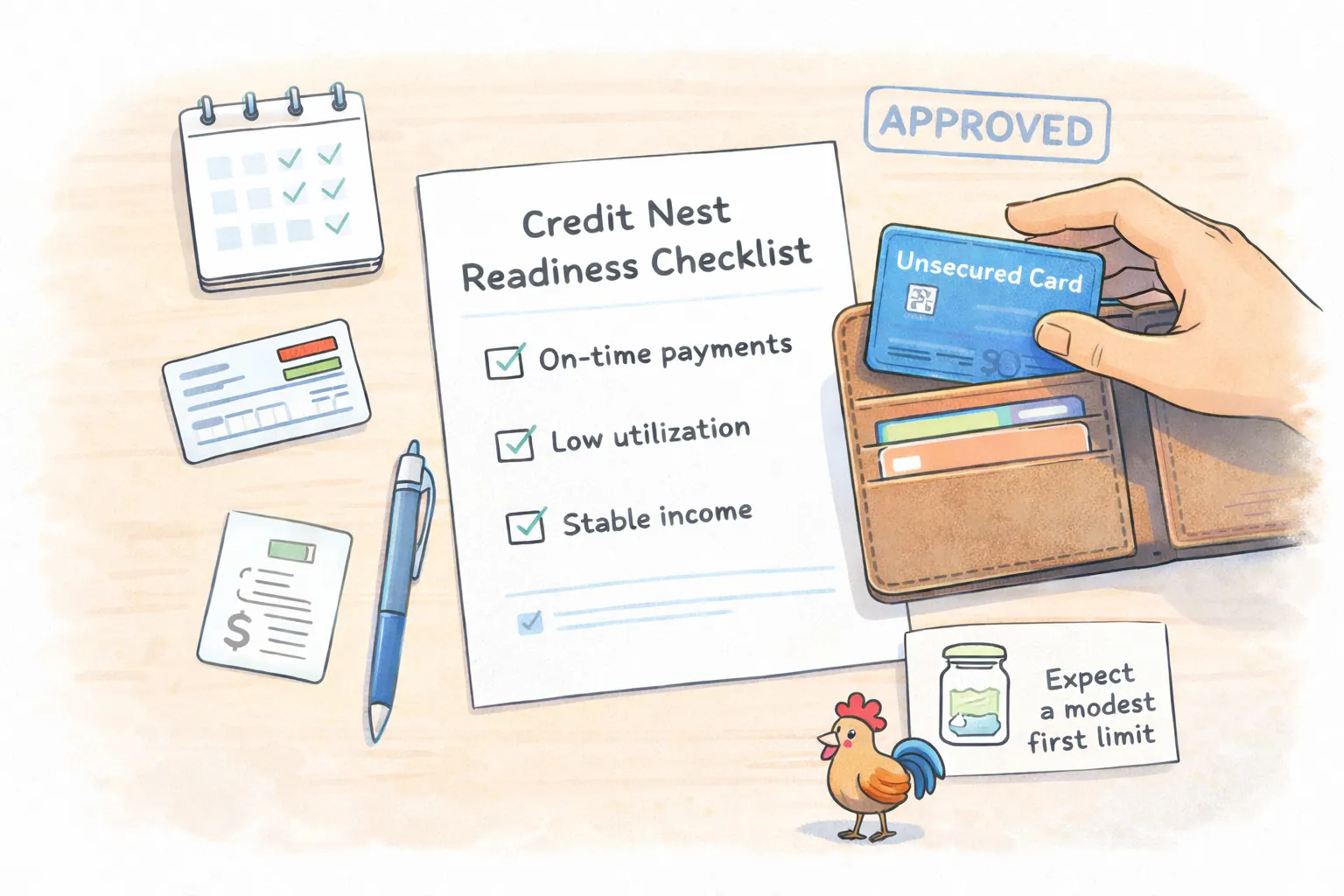
In practice, issuers review these signals together, not in isolation. A stronger overall pattern is what moves you toward approval.
The Graduation Path: From Secured to Unsecured
Over time, as you consistently use your secured card responsibly, making all payments on time and keeping your utilization low, you're building a strong payment history and demonstrating financial maturity. Many secured card providers offer a "graduation" path. After 6 to 18 months of responsible use, they may review your account and, if satisfied, return your security deposit and convert your card into an unsecured one. This is a clear signal that you've earned the lender's trust and are ready for the next level of financial independence. It's like successfully fledging from your starter nest, ready to build your own, stronger roost.
If your current secured card doesn't offer a graduation path, or if you're looking for different terms, you can apply for an unsecured card with another lender once you've established a solid credit history (typically 6+ months) through your secured card. Your positive payment history will be visible to other lenders, making you a more attractive applicant.
Open and activate secured card
Use it for one or two predictable monthly expenses.
Build clean statements
Report low balances and pay in full by each due date.
Watch for graduation review
Some issuers auto-review your account for unsecured conversion.
Apply if needed
If no graduation, apply for one starter unsecured card.
Setting Realistic Expectations: Limits, Inquiries, and Responsible Use
As you embark on getting your first unsecured card, it's vital to temper your expectations. Your initial credit limit might not be as high as you hope. Lenders typically start new cardholders with more modest limits, perhaps a few hundred to a couple of thousand dollars, to manage their risk. This is not a slight against you; it’s a standard practice to see how you handle this new level of trust before extending more. Think of it as a small, sturdy branch for your first independent roost, which can be expanded over time.
Once you have your unsecured card, responsible use isn't just a suggestion. It's the bedrock of your ongoing credit health. In practice, that means:
- Paying your bill in full and on time every month: This avoids interest charges and builds that all-important positive payment history.
- Keeping your credit utilization low: Aim for 30% or less, ideally under 10%, to signal strong credit management.
- Monitoring your credit report: Regularly check for errors or fraudulent activity, which can negatively impact your score. Use Reading Your Credit Report as a practical walkthrough.
First Unsecured Card: Early-Month Guardrails
- Use the card for planned essentials you can repay in full.
- Keep reported utilization below 30%, ideally near 10%.
- Enable autopay plus reminders before the due date.
- Apply for multiple new cards within the same month.
- Carry a balance assuming it helps your score.
- Ignore statement dates and only watch due dates.
Use this split as your operating checklist during the first six months, when lenders are reassessing your risk profile.
Real-Life Journeys: From Fledgling to Free-Flying
Let’s look at a couple of scenarios that illustrate the path to an unsecured card:
-
Nico's First Steps: Nico arrived in the US with no credit history, a classic "thin file" scenario. After struggling to get approved for an apartment, he decided to build credit the right way. He started by opening a secured credit card with a $300 deposit. For eight months, he used the card for small, predictable expenses like groceries and streaming services, always paying the full balance before the due date. He also set up rent reporting to add another positive tradeline to his file. After eight months, his credit score was in the mid-600s, and his secured card issuer automatically converted his card to an unsecured one, returning his deposit. He then applied for another entry-level unsecured card, which he was approved for, and now proudly manages two cards, continuing his journey of responsible credit building.
-
Riley's Rebound: Riley faced some financial hardship a few years back, resulting in a couple of late payments and a collection account that recently dropped off his report. He knew he needed to rebuild his credit to get better rates on a future car loan. Riley decided to open a secured card, placing a $500 deposit. He committed to strict budgeting and used the card only for a single, small recurring bill, setting up automatic payments to ensure he never missed a due date. After 15 months, his secured card graduated to an unsecured one, and his credit score had climbed significantly. He learned to appreciate the slow, steady progress, understanding that consistent positive action heals past financial wounds and rebuilds trust with lenders.
Do you have at least 6 months of on-time payments with low utilization?
This checkpoint keeps applications intentional and helps you avoid unnecessary hard inquiries while your profile is still maturing.
Beyond the Card: Durable Credit Builders and When to Consider a Tradeline
While getting your first unsecured card is a huge step, remember it's just one part of building a strong, resilient financial nest. To truly strengthen your credit profile for the long haul, consider incorporating other durable credit builders:
- Credit-Builder Loans: These are designed specifically to help you build credit by saving money. The loan amount is typically held in a locked account while you make payments. Once paid off, you receive the money, and your on-time payments are reported to credit bureaus. For account-type context, read Revolving vs. Installment Credit.
- Rent Reporting Services: Since rent payments typically aren't reported to credit bureaus, services that report your on-time rent payments can add a significant positive tradeline to your file, especially helpful for those with limited credit history.
- Low Utilization and Payment History: These fundamental habits are your most powerful tools. Consistently pay on time and keep your credit utilization below 30% (ideally much lower).
For those seeking near-term credit visibility, especially if you have a very thin file or need to show a more robust profile for a specific application soon, an authorized user (AU) tradeline can be a useful gateway. By being added as an authorized user to an older, well-managed credit card account, that account's positive payment history may appear on your credit report. This may contribute to more visible depth and age in your profile, depending on lender and model treatment. However, remember that while AU tradelines can support near-term visibility, the durable strength of your credit ultimately comes from managing your own accounts responsibly, like your unsecured card. Results from tradelines vary across lenders and credit models, and they are best paired with your own long-term credit-building efforts.
Discloure
ImportantSome lenders and credit scoring models may filter out, discount, or weigh authorized user tradelines differently in their underwriting decisions. Results vary based on lender policies, the specific scoring model used, and your unique credit profile. An AU tradeline does not guarantee loan approval or any specific credit score outcome.
Your Path to a Stronger Financial Future
Opening your first unsecured credit card is more than just getting a piece of plastic; it's a testament to your growing financial maturity and a crucial step towards greater financial freedom. It requires understanding what lenders look for, patiently building your history, often starting with a secured card, and committing to responsible use for the long term.
As you continue to nurture your financial nest, remember that every on-time payment, every low utilization statement, and every smart credit decision adds a stronger twig. So take flight, armed with knowledge and good habits, and watch your financial future soar.
Action Items for Your First Unsecured Card
- Maintain a flawless payment history on all existing accounts.
- Keep your credit utilization ratio below 30% (ideally under 10%).
- Consider a secured credit card as a stepping stone if you have limited history.
- Monitor your credit report regularly for accuracy.
- Apply for new credit strategically, spacing out applications.
- Use your new unsecured card responsibly by paying on time and in full.
Frequently Asked Questions
1. What credit score do I need for my first unsecured credit card?
- There isn't a universal minimum, but for your first unsecured card, lenders typically look for a score in the mid-600s (FICO or VantageScore). Many "starter" unsecured cards are designed for those with fair credit (600-660), while cards with better rewards or lower interest rates often require good to excellent credit (670+).
2. How long does it take to graduate from a secured to an unsecured card?
- The timeline varies by issuer, but typically it takes 6 to 18 months of consistent, responsible use (on-time payments, low utilization). Some issuers may automatically review your account, while others might require you to request a review.
3. Can I get an unsecured card without ever having a secured card?
- Yes, it's possible, especially if you have a strong income, a cosigner on another loan, or a history of on-time student loan payments. However, for those with truly limited or no credit history, a secured card is often the easiest and most reliable path to establish the necessary foundation.
4. What are the best first unsecured credit cards?
- Look for cards marketed towards "fair credit" or "building credit." Often, these come from major banks or credit unions and have less stringent approval requirements. Focus on cards with no annual fee and a clear path to higher limits with responsible use.
5. How many credit cards should I have?
- For your first unsecured card, one is sufficient to focus on building responsible habits. As your credit profile strengthens, managing two or three cards responsibly can be beneficial for showing a diverse credit mix and increasing your total available credit, which helps lower your overall utilization. However, never open more cards than you can comfortably manage.
6. What should I do immediately after getting my first unsecured card?
- Once approved, activate your card, set up online access, and consider enrolling in autopay for at least the minimum payment to ensure you never miss a due date. Use the card for small, manageable expenses that you can pay off in full each month to build a strong payment history and keep your utilization low.