Key Takeaways
- Most negative items (late payments, collections, charge-offs) typically remain for seven years from the date of first delinquency.
- Bankruptcies can stay on your report for up to 10 years, depending on the chapter filed.
- The exact timeline can vary by the specific item type and state regulations.
- Monitoring your credit reports regularly is crucial to ensure accuracy and track when items are set to fall off.
- While you wait for negative items to age off, focus on building positive credit history through new accounts and responsible financial habits.
- Dispute any errors you find on your report, as removing incorrect information can help improve your standing sooner.
The Seven-Year Mark: A General Rule for Most Derogatories
Item-Specific Durations: What Stays, and For How Long?
While the seven-year rule is a good general guideline, the precise duration can vary significantly based on the type of negative item. Let's break down some common derogatories and their typical lifespans:
-
Late Payments: A single late payment can remain on your credit report for seven years from the date of the missed payment. Multiple late payments on the same account will also typically fall off after seven years from the date of the first delinquency that led to the account becoming derogatory, not seven years for each individual late payment.
-
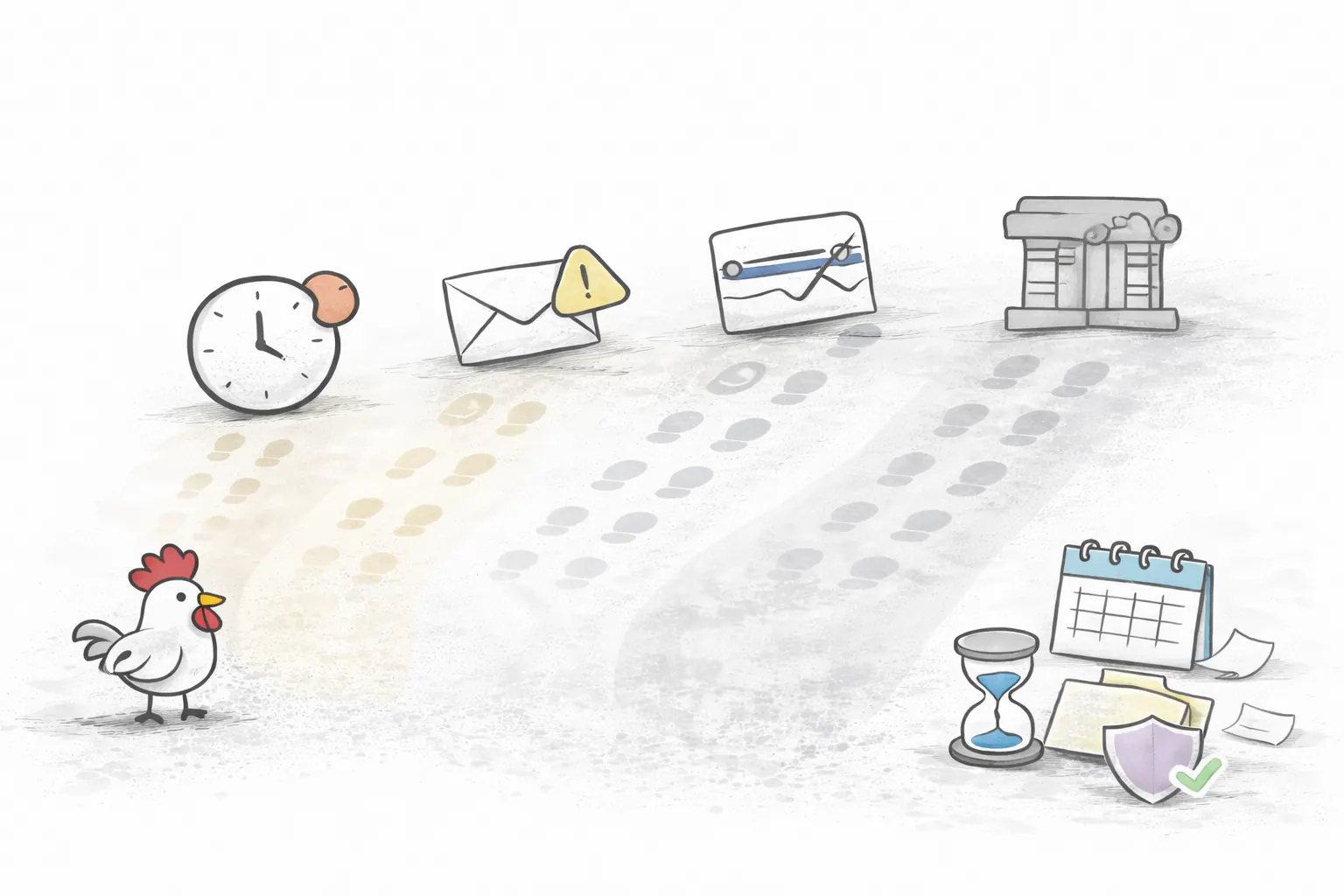
Collections Accounts: If an account goes to collections, it will generally remain on your credit report for seven years and 180 days from the date of the original delinquency with the original creditor. This means the clock starts ticking when you first missed a payment, not when the account was sold to a collection agency. Payments to a collection account, or even agreeing to a payment plan, generally don't restart this clock, which is a common misconception.
-
Charge-Offs: When a creditor gives up on collecting a debt, they 'charge it off.' Like collections, a charge-off stays on your report for seven years from the date of the original delinquency. Again, the original missed payment date is what matters.
-
Foreclosures: A foreclosure, which occurs when a lender repossesses a property due to missed mortgage payments, can stay on your credit report for seven years from the date of the first missed payment that led to the foreclosure.
-
Bankruptcies: These are among the longest-lasting negative items.
- Chapter 7 bankruptcies (liquidation) typically remain on your report for 10 years from the filing date.
- Chapter 13 bankruptcies (reorganization with a repayment plan) generally stay for seven years from the filing date, or sometimes 10 years if the plan wasn't completed successfully.
-
Civil Judgments and Paid Tax Liens: While the law used to allow these to stay for longer, recent changes have impacted their reporting. As of July 1, 2017, all three major credit bureaus (Equifax, Experian, and TransUnion) removed most tax liens and civil judgments from consumer credit reports if they didn't include enough identifying information (like a name, address, and date of birth). For those that remain, they typically expire after seven years from the filing date or upon their release date, whichever is shorter. Most paid tax liens will fall off after seven years from the payment date.
-
Repossessions: Similar to other defaulted accounts, a repossession will remain on your credit report for seven years from the date of the first missed payment that led to the repossession.
Understanding these item-specific timelines helps you accurately assess your credit report and anticipate when older, less impactful items might finally age off.
For faster review, keep this table handy while scanning your report:
Negative Item Timeline Snapshot
| Item Type | Typical Reporting Window | Clock Start |
|---|---|---|
| Late payments | 7 years | Missed payment date |
| Collections | 7 years + 180 days | Original delinquency date |
| Charge-offs | 7 years | Original delinquency date |
| Foreclosures | 7 years | Missed payment leading to foreclosure |
| Chapter 7 bankruptcy | 10 years | Filing date |
| Chapter 13 bankruptcy | 7 years (sometimes 10) | Filing date |
This gives you a practical checklist before deciding whether an account is truly over-reporting.
The Crucial 'Date of First Delinquency' (DOFD)
This might sound like jargon, but the Date of First Delinquency (DOFD) is perhaps the most important date to understand when it comes to negative items. The FCRA stipulates that the seven-year clock for most negative items starts ticking from the DOFD, the very first time you missed a payment on an account that subsequently went into default, collection, or charge-off. It’s not when the collection agency bought the debt, or when you finally made a payment on a collection account, or when the account was closed. So even if a collection agency contacts you years later, or you start making payments on an old debt, the original seven-year countdown for reporting purposes generally doesn't restart. This protection is critical, ensuring that old debt doesn't live indefinitely on your credit report.
This sequence makes the removal timeline easier to audit account by account:
First missed payment
The account first becomes delinquent and establishes DOFD.
Account status worsens
May progress to charge-off, collection, or foreclosure status.
Approaching removal window
Verify each bureau is tracking the same clock start date.
Dispute if still reporting
File a dispute when an item remains beyond its allowed period.
With this cadence, you can document timing issues before they cost you points.
Date of First Delinquency (DOFD)
The initial date a payment was missed on an account that subsequently goes into default, collection, or charge-off. This date is crucial because it generally marks the beginning of the seven-year reporting period for most negative items on a credit report, and it does not reset.
credit report timelines
Why These Timelines Matter: Your Credit Score and Beyond
Negative items aren't just entries on a report; they are like heavy anchors holding down your credit score. They signal to lenders that there's a higher risk involved, making it harder to get approved for loans, credit cards, or even apartments, and often leading to higher interest rates if you are approved. The older a negative item gets, the less impact it generally has on your score, but it still contributes to a lower overall standing until it's completely gone.
The biggest gains usually come from pairing patience with active tracking and positive payment behavior.
Strategies While You Wait: Building a Stronger Nest
Waiting for negative items to age off can feel like watching grass grow, but it doesn't mean you should be passive. This period is a golden opportunity to build a robust, positive credit history that will shine brightly once the old shadows disappear. Here’s how you can proactively strengthen your financial nest:
-
Prioritize On-Time Payments: This is the bedrock of good credit. Consistency signals reliability to lenders. Make every payment, every time, on or before the due date.
-
Keep Credit Utilization Low: Aim to use no more than 30% (ideally 10% or less) of your available credit on revolving accounts. High utilization can significantly drag down your score. If you want a practical framework, review the 30% utilization rule and when to stay even lower.
-
Diversify Your Credit Mix (Wisely): Over time, a healthy mix of credit (revolving accounts like credit cards and installment loans like auto loans) can be beneficial. However, only take on new credit you genuinely need and can manage.
-
Consider Credit-Building Tools: If your credit file is thin or recovering, tools like secured credit cards or credit-builder loans can be incredibly effective. They report your positive payment history to the bureaus, helping you establish new, positive tradelines. For a step-by-step starting point, use this secured card guide for rebuilding credit safely.
-
Report Rent Payments: For many, rent is their largest monthly expense, yet it often goes unreported to credit bureaus. Services that report your on-time rent payments can add a significant positive tradeline to your report, accelerating your credit-building journey. This is one of the
durable builderswe champion at Credit Roost. -
Explore Authorized User (AU) Tradelines: For newcomers or those needing faster visibility, becoming an authorized user on a seasoned account with excellent payment history may help establish a positive credit presence. While not a standalone solution, it may add early visibility, allowing you to then add your own
durable builderslike secured cards or credit-builder loans for sustainable growth. If you want to understand mechanics and timing, read how AU tradelines work in real credit files. Just remember, the long-term strength of your credit nest relies on your own responsible financial habits.
- Track DOFD and expected removal dates for every derogatory account
- Build new positive history while old items age off
- Check all three bureaus on a recurring schedule
- Assume all bureaus update on the same timeline
- Ignore accounts reporting beyond legal windows
- Rely on one tactic without building your own primary accounts
Treat this period as an active rebuild phase, not just a waiting period.
holistic credit repair, extending far beyond just disputing errors. It’s about building new, sturdy branches while the old, damaged ones naturally fall away. Holistic Credit Repair: Beyond Dispute Letters dives deeper into this philosophy.Real-Life Nest Building: Stories from the Roost
-
Nico's First Glimmer: Nico, a recent graduate, was excited to get his first apartment. To his dismay, a small medical bill from two years ago had gone to collections and was dragging down his otherwise thin file. He learned it would age off in five more years, but he couldn't wait. By becoming an authorized user on his aunt's long-standing credit card, he quickly gained some positive history. Simultaneously, he opened a secured credit card, diligently paying a small recurring bill each month. While the collection item was still there, the new positive accounts started to build a counter-narrative, showing his current reliability and helping him secure his apartment.
-
Riley's Strategic Comeback: Riley had a few rough years, leading to a couple of charge-offs and a foreclosure. Instead of despairing, she used a credit monitoring service to pinpoint the exact DOFD for each item. She knew the foreclosure would drop off in 18 months, and a charge-off in 10 months. While waiting, she committed to a credit-builder loan and ensured all her current bills were paid on time, every time. She also started having her rent payments reported. By the time the old items disappeared, she had built a year and a half of perfect payment history on multiple new accounts, positioning her for a significant score jump and enabling her to qualify for a better car loan rate (a far cry from what she'd have faced just a year prior).
-
The Time-Sensitive Project: Maya was looking to get a favorable mortgage rate in two years. She discovered an old late payment from six years ago. Knowing it would fall off in exactly one year, she prioritized immaculate payments on all her current accounts, kept her credit utilization incredibly low, and focused on maintaining a stable financial picture. When that last late payment finally aged off, her score saw a noticeable jump, helping her secure a lower interest rate on her mortgage, saving her thousands over the life of the loan. This demonstrates the
power of patiencecombined with proactive good habits The Power of Patience: Length of History.
Which rebuild focus fits your current profile?
Thin file + one derogatory
Prioritize starter tradelines and perfect payment consistency.
Multiple older derogatories
Track each timeline and pair with low utilization and account stability.
Upcoming major financing
Time removals and disputes around underwriting windows.
A profile-specific plan usually outperforms generic advice.
Quick Reference for Reporting Timelines
Another practical takeaway from the raw source is to keep a simple timeline tracker so you are never guessing when an item should age off. Most people lose leverage because they know a rule in general, but not the exact date attached to their own account history. A lightweight tracker solves that.
For each negative account, record five fields:
- account name
- item type (late payment, collection, charge-off, foreclosure, bankruptcy)
- date of first delinquency
- expected removal month
- current bureau status (Experian, Equifax, TransUnion)
Account ID
Track creditor name and account reference consistently.
DOFD Date
Record the date that starts the reporting clock.
Removal Month
Log the projected month when reporting should end.
Bureau Status
Check Equifax, Experian, and TransUnion separately.
With this, you can do monthly checks in minutes instead of re-reading your full history every time.
A practical pattern:
- Pull one bureau report.
- Compare each negative line item to your tracker.
- Mark whether it is still within the legal reporting window.
- If a date has passed, queue a dispute and attach proof.
- Recheck the next bureau on your next cycle.
This matters because not all bureaus update at the same pace. You may see an item disappear on one report first, then on another later. That delay can look like an error when it is simply asynchronous reporting. Your tracker helps you separate normal lag from real over-reporting.
If you are rebuilding, use this tracker alongside your positive-building plan. Pairing timeline awareness with on-time payments, low utilization, and durable accounts gives you both short-term control and long-term momentum. You are no longer waiting passively for old damage to expire. You are running an active cleanup process while you build stronger data each month.
When you document every status change, you also build evidence for lender conversations. If a mortgage underwriter asks about past derogatories, you can explain exactly what aged off, when, and what positive behavior replaced it. That clarity can improve trust and speed up manual reviews.
Your Path Forward: Patience and Positive Action
Understanding how long negative items stay on your credit report isn't about wishing them away; it's about empowerment. It allows you to track their eventual departure and, more importantly, to focus your energy on what you can control: building a strong, positive financial nest brick by brick, twig by twig. Each on-time payment, each responsibly managed account, and each new positive tradeline you add acts as a powerful counter-narrative to past difficulties.
Whether you're waiting for old storms to pass, or actively trying to build up your file, remember that authorized user tradelines may help establish earlier visibility, and they are best paired with durable builders like secured credit cards, credit-builder loans, and rent reporting for sustainable, long-term credit strength. By taking consistent, deliberate steps, you’re not just waiting; you’re actively cultivating a resilient financial future.
Disclosure
ImportantSome lenders and credit scoring models may filter out, discount, or weigh authorized user tradelines differently in their underwriting decisions. Results vary based on lender policies, the specific scoring model used, and your unique credit profile. An AU tradeline does not guarantee loan approval or any specific credit score outcome.
Ready to take the next step in shaping your financial nest? Explore how these strategies can work for you.
Action Items
- Monitor your credit reports regularly for accuracy and to track item removal dates.
- Dispute any errors or items reporting beyond their legal limit.
- Prioritize making all payments on time, every time.
- Keep your credit utilization ratio low (ideally under 10-30%).
- Explore credit-building tools like secured credit cards or credit-builder loans.
- Consider reporting your on-time rent payments to strengthen your credit file.
- If suitable, explore authorized user tradelines for earlier credit visibility.
Frequently Asked Questions
1. How long do most negative items stay on your credit report?
- Most negative items, such as late payments, collections, and charge-offs, typically remain on your credit report for about seven years from the Date of First Delinquency (DOFD).
2. How long do bankruptcies stay on a credit report?
- Chapter 7 bankruptcies can stay on your credit report for up to 10 years from the filing date, while Chapter 13 bankruptcies typically remain for seven years from the filing date.
3. What is the 'Date of First Delinquency' and why is it important?
- The Date of First Delinquency (DOFD) is the date you first missed a payment on an account that ultimately led to a negative status (e.g., collection, charge-off). This date is crucial because it's the starting point for the seven-year reporting period for most negative items, and it generally does not reset, even if you make payments later.
4. Does paying a collection account remove it from my credit report sooner?
- No, paying a collection account does not remove it from your credit report sooner. It will update the status to 'paid collection,' which is better than 'unpaid,' but the item will still remain on your report for the full seven years from the original Date of First Delinquency.
5. What should I do while waiting for negative items to fall off my credit report?
- While waiting, focus on building positive credit history. This includes making all payments on time, keeping credit utilization low, and considering credit-building tools like secured credit cards, credit-builder loans, or reporting rent payments. Authorized user tradelines may also help establish credit visibility earlier.
6. Can I dispute negative items that are reporting beyond their legal limit?
- Yes, if a negative item is reporting beyond its legally mandated timeframe (e.g., more than seven years from the DOFD for most items, or 10 years for Chapter 7 bankruptcy), you should absolutely dispute it with the credit bureaus to have it removed.
Just as a bird meticulously repairs and strengthens its nest after a storm, your credit journey is about enduring past challenges and building a more resilient structure for the future. The negative items will eventually fall away, making room for new, strong branches of positive credit history. With patience, persistence, and a clear understanding of the rules, you can absolutely restore and even enhance your financial roost, creating a solid foundation for all your future flights.