Key Takeaways
- Real credit repair combines correcting inaccuracies with consistent positive financial behavior.
- On-time payments, budgeting, and debt payoff systems are the foundation of sustainable score growth.
- Tools like secured cards, credit-builder loans, and rent reporting help create stronger primary history.
- Authorized user tradelines can improve visibility, but durable strength comes from accounts in your own name.
- Ongoing monitoring, identity protection, and emergency savings protect your rebuilt profile over time.
Beyond Quick Fixes: What Holistic Credit Repair Really Means
Traditional "credit repair" is often framed as dispute letters only. That framing is incomplete.
A complete strategy has two tracks:
- Correct inaccurate data and protect your rights.
- Build durable positive history through your own consistent habits.
If you correct inaccurate items but never build strong new behavior, score momentum can stall. Combine both tracks, and your profile becomes stronger and more resilient.
Start With Accuracy: Audit and Dispute With Evidence
Credit Report Audit
A full review of your credit files to verify account details, payment records, balances, and ownership are accurate across bureaus.
Holistic Credit Repair
When you find errors, build an evidence packet. Include account statements, payment confirmations, identity documents, and any supporting correspondence.
Then submit targeted disputes and track every timeline. If the issue is complex, contact the creditor directly and document each interaction.
You can pull your bureau files through AnnualCreditReport.com and review them on a repeating cadence. For complex issues, especially medical-debt reporting questions, keep written notes and contact both the bureau and the creditor so your records and deadlines stay aligned.
Build the Core Systems: Payment History, Budgeting, and Debt Control
Most score progress comes from behavior, not paperwork.
A sinking-fund system can add another layer of control by reserving small monthly amounts for predictable bigger expenses. That reduces the odds of relying on high-interest credit when irregular bills hit.
The percentages above are a practical execution model, not a scoring formula. Use them to prioritize weekly actions.
Add Positive Accounts, Feather by Feather
As you clean errors and stabilize payments, start adding or strengthening accounts that report positive history in your own name.
Useful tools include:
- Secured cards used lightly and paid in full.
- Credit-builder loans with consistent monthly payments.
- Rent reporting services when available.
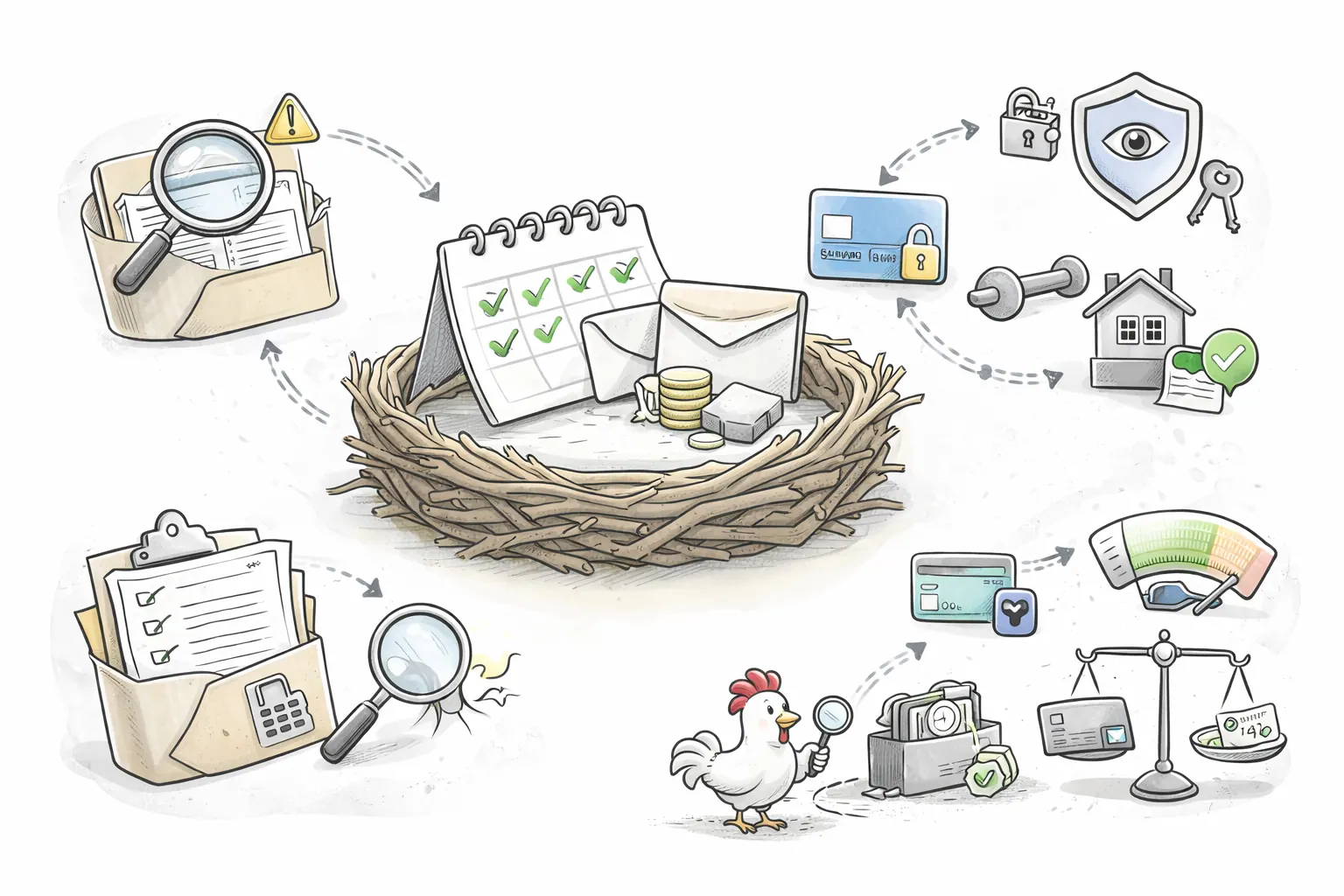
Authorized user (AU) tradelines can help improve profile visibility in some cases, especially early in rebuilding. But long-term strength should come from your own managed accounts and your own payment history.
Master Utilization and Credit Mix Without Overextending
Paying down balances before statement close can reduce reported utilization and improve profile stability. At the same time, keep account growth intentional. Do not open new lines just to "optimize mix" unless payments are clearly affordable.
Utilization control is often an in-cycle habit, not just an end-of-month task. Some borrowers make multiple payments during a billing cycle to keep reported balances lower. Credit mix also matters over time: lenders often want to see responsible handling of both revolving accounts and installment accounts, but only add accounts when repayment clearly fits your budget.
Utilization and Mix Guardrails
- Keep revolving balances controlled and track utilization each cycle
- Use new accounts only when they fit your budget and long-term plan
- Prioritize consistency over speed when rebuilding
- Max out cards and rely on minimum payments
- Open multiple new accounts just to chase score movement
- Ignore statement timing when balances are high
How the Holistic Approach Looks in Real Life
Nico, the Newcomer
Nico corrected minor student-loan reporting issues that were complicating an apartment application. He then added a secured card and credit-builder loan, used small recurring charges, and paid in full each cycle to establish stronger primary history.
Riley, the Rebuilder
Riley resolved medical debt inaccuracies, negotiated valid balances, and used the avalanche method to reduce high-interest cards. As balances fell, utilization improved and progress accelerated, which made monthly cash flow more stable.
Penny, the Optimizer
Penny already had decent credit, but added rent reporting, automated bill systems, periodic report audits, and a simple budgeting app to protect mortgage readiness. Her profile did not rely on one tactic; it improved through consistent maintenance.
Correct what is inaccurate
Audit all reports, gather evidence, and dispute precisely.
Stabilize cash flow
Automate payments, budget monthly, and reduce revolving debt.
Build positive depth
Use primary accounts and responsible utilization to add durable history.
Protect the gains
Monitor reports, defend against fraud, and maintain emergency reserves.
Different starting points can still follow the same structure: accuracy first, behavior second, growth third, protection always.
Protect Your Rebuilt Profile Over Time
Credit repair is not one project with a finish date. It is an ongoing maintenance system.
Practical identity protection matters here: use strong unique passwords, shred sensitive paper records, and treat unexpected email or text requests as potential phishing attempts until verified.
The objective is not just a higher score. It is long-term financial freedom with lower dependence on expensive credit.
Disclosure
ImportantThis guide is educational and not legal or financial advice. Credit outcomes vary by report data, lender policies, and your ongoing payment behavior.
Use this disclosure as your baseline: strategy may support better outcomes, but no tactic can promise a guaranteed score result.
Authorized User Disclosure
ImportantSome lenders and credit scoring models may filter out, discount, or weigh authorized user tradelines differently in underwriting. Results vary by lender policy, scoring model, and your profile. An AU tradeline does not guarantee approval or a specific score outcome.
Your Flight Plan: A Holistic Credit Repair Checklist
Move in sequence so each layer supports the next.
Audit all bureau reports and dispute verified inaccuracies
Automate payments and lock in a realistic monthly budget
Reduce revolving balances and control utilization timing
Add and maintain primary credit-building accounts
Monitor reports and protect progress with emergency reserves
Use this stepper as your execution sequence. Then run a checklist audit before each monthly close.
Holistic Credit Repair Action Items
- Pull reports and document each disputed item with evidence.
- Set autopay for all required obligations and keep calendar reminders.
- Use debt snowball or avalanche to lower balances with structure.
- Track utilization every statement cycle and keep balances controlled.
- Add long-term builders in your own name (secured card, credit-builder loan, or rent reporting).
- Review reports monthly and respond quickly to suspicious changes.
Run this checklist now, then again every 30 days.
Is your current plan correcting errors and building new positive history at the same time?
Holistic repair is slower than shortcuts, but far more durable. Feather by feather, that is how your financial nest becomes strong again.
A 90-Day Operating Cadence for Holistic Repair
Many people fail not because they lack motivation, but because they lack a repeatable cadence. A simple 90-day loop can keep your plan moving:
- Weeks 1-2: Complete report audit, prioritize disputes, and submit evidence-backed corrections.
- Weeks 3-4: Lock in payment automation, budget rules, and utilization targets for statement timing.
- Month 2: Execute debt reduction sequence and review account behavior weekly.
- Month 3: Recheck reports, measure trend changes, and adjust your next quarter plan.
Use a visible checkpoint to keep the cadence from slipping mid-cycle:
Then track your operating metrics in one compact dashboard:
90-Day Operating Dashboard
| Cycle metric | Target threshold | Escalation trigger |
|---|---|---|
| On-time payment rate | 100% each cycle | Any missed required payment |
| Average utilization at statement close | Under 30% (prefer lower) | Two consecutive cycles above target |
| Dispute resolution velocity | Open items reviewed weekly | No status movement after 45 days |
| Emergency reserve consistency | Monthly contribution active | Contribution skipped for 2 cycles |
This cadence keeps repair and building aligned. If you only dispute, momentum can fade. If you only "build" while errors stay unresolved, progress can stay artificially limited.
Treat each 90-day cycle like a control loop: assess, execute, measure, adjust. Credit strength grows when you keep the loop active.
Document one clear metric from each cycle, such as on-time payment rate, average utilization at statement close, disputed-item resolution rate, and emergency-fund consistency. Seeing trends reduces guesswork and helps you correct faster when performance slips.
Holistic repair works best when you treat credit as one part of your full financial ecosystem, not an isolated score target. Authorized user tradelines may help visibility for some profiles, but durable strength usually comes from your own accounts, your own payment behavior, and consistent execution over time.
Frequently Asked Questions
Before the detailed questions, run this quick reality check:
"If I dispute errors, my credit rebuild is complete."
Error correction is only one track; durable progress requires ongoing payment and utilization discipline.
Profiles improve fastest when dispute cleanup and positive account behavior run in parallel over repeated cycles.
1. Is holistic credit repair the same as sending dispute letters?
- No. Disputes are one track. Lasting improvement also requires payment consistency, utilization control, and stronger primary accounts.
2. How long does holistic credit repair usually take?
- Progress often takes months, not days. Timelines depend on your starting profile, debt load, and monthly payment reliability.
3. Can authorized user tradelines guarantee approval for a loan?
- No. Lenders and scoring models may weigh AU tradelines differently, so results vary and approvals are never guaranteed.
4. What should I do first if my credit report has errors?
- Pull all bureau reports, document each inaccuracy with evidence, and file targeted disputes while tracking deadlines.
5. Should I open multiple new accounts to improve credit mix quickly?
- Usually no. Open accounts intentionally and only when payments are clearly affordable in your current budget.
6. What protects rebuilt credit from future setbacks?
- Ongoing report monitoring, fraud protection habits, and emergency savings that reduce dependence on high-cost borrowing.