Key Takeaways
- A 600 score usually improves faster when you diagnose the exact issues across all three credit reports first.
- On-time payments and low utilization are still the two highest-impact scoring habits for most people.
- Closing old accounts, opening too many new lines, and chasing quick fixes can delay progress.
- Tools like secured cards, credit-builder loans, and rent reporting can help when used in a sequenced plan.
- Authorized user tradelines may improve visibility for some files, but outcomes vary by lender and scoring model.
- Credit rebuilding is usually steady, not instant, and consistency matters more than one-time tactics.
Understanding Why a 600 Score Happens
Current Score Zone
If you find inaccurate information, dispute it quickly. A clean report gives every other rebuilding step a better chance to work.
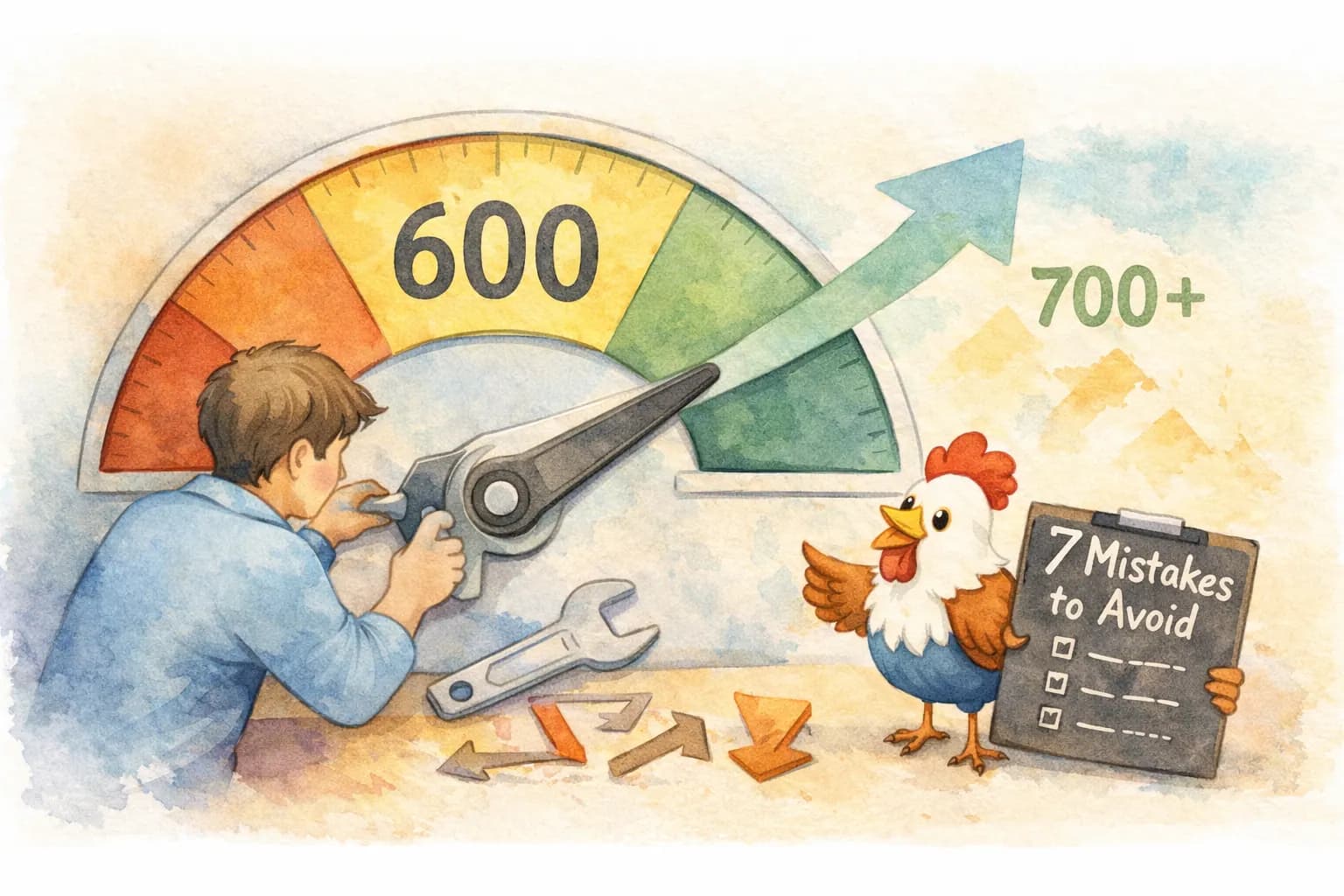
Seven Mistakes That Keep You Stuck
These are the patterns that slow down most rebuild attempts.
Rebuild Smarter
- Review all three reports before making changes.
- Keep credit card utilization low and stable.
- Use a small number of predictable, repeatable actions.
- Apply for multiple new accounts at once.
- Close old accounts that still help average credit age.
- Trust services that promise guaranteed score jumps.
Here are the seven specific mistakes to avoid:
1. Skipping all three credit reports
- Missing one bureau can hide errors or outdated balances that still affect approvals.
2. Chasing quick fixes without a root-cause plan
- Temporary tactics fade fast if late payments or high utilization are still active.
3. Closing old accounts too early
- That can raise utilization and reduce average account age, especially if you close cards without checking closure tradeoffs first.
4. Running up balances on new credit
- New lines help less when they are immediately maxed or nearly maxed.
5. Submitting too many applications in a short window
- Clusters of hard inquiries can add risk signals for lenders. If timing is tight, use an inquiry-timing strategy before applying again.
6. Believing guaranteed score promises
- No company can guarantee a specific score increase or approval. The FTC credit repair guidance explains what to watch for.
7. Expecting instant results
- Credit rebuilding usually moves in phases, and progress compounds over time.
Most stalled files are not missing effort; they are missing sequence. Getting the order right usually matters more than adding extra tactics.
"I need a secret hack to fix a 600 score quickly."
Most improvement comes from report accuracy, on-time payments, and controlled utilization.
Score gains usually reflect repeated behavior across multiple cycles, not one-time tricks.
A Sequenced Plan to Rebuild From 600
You do not need perfect execution. You need consistent execution.
Week 1
Pull all three reports, flag errors, and start disputes where needed.
Weeks 2-4
Set all bills to on-time autopay and lower high revolving balances.
Months 2-3
Add one durable builder, such as a secured card or credit-builder loan.
Months 4-6
Track bureau updates and adjust only after data confirms progress.
In practice, most people should prioritize:
- Payment history first. It usually carries the largest scoring weight. If needed, automate everything.
- Utilization second. Keep revolving balances controlled, especially before statement closing dates. Use utilization rules, utilization timing tactics, and payment history fundamentals as your baseline.
- Then add durable builders. A secured card, credit-builder loan, or rent reporting can help build fresh positive data; start with secured card basics if needed.
Utilization is often where people see faster movement once payments are stable. For example, if a card has a $1,000 limit and reports a $900 balance, that is 90% utilization and usually a strong negative signal. Bringing that same balance down before statement close can meaningfully improve how the file is read in the next cycle.
When you choose builders, use them with a clear purpose:
- Secured cards: Best for rebuilding revolving history with controlled risk. Keep balances low and pay in full when possible.
- Credit-builder loans: Useful for adding installment history and showing payment consistency over time.
- Rent reporting: Can add recurring positive data for people with thin files, especially when no major installment account exists.
Where Authorized User Tradelines Fit
For some people, authorized user tradelines can improve file visibility or average account age faster than waiting on new accounts alone. But this is not universal. Lender filters, model differences, and profile details can all change the outcome.
Disclosure
Some lenders and credit scoring models may filter out, discount, or weigh authorized user tradelines differently in underwriting decisions. Results vary based on lender policies, scoring model, and your credit profile. An AU tradeline does not guarantee approval or a specific score outcome.
Durable strength usually comes from your own track record. Tradelines can be a tool, but they should not replace your payment consistency and utilization control.
Two Real Rebuild Paths
To make the plan concrete, here are two typical recovery profiles:
Riley (rebuild after setbacks): Riley dropped into the 600 range after a period of late payments and high balances during a financial shock. The first win came from pulling all three reports and disputing factual errors. Then Riley focused on two behaviors only: never miss a payment and lower statement balances each cycle. After several months of consistent data, score movement became visible and approvals improved.
Nico (thin-file growth): Nico did not have major negatives, but had little history and limited scoring depth. Nico used one secured card carefully, kept utilization low, and added positive reporting over time. Later, an authorized user tradeline was used as a visibility tool, not a replacement for personal habits. The file became more complete, and score stability improved with each reporting cycle.
Both examples show the same principle: the score follows repeatable behavior. Fast visibility tactics can help some profiles, but durable progress comes from your own payment and utilization track record.
Guardrails That Protect Progress
Once your score starts moving up, the next challenge is keeping momentum.
Monthly
Keep every account current and confirm autopay settings after any bank change.
Monthly
Review utilization before statement dates so balances do not report too high.
Quarterly
Check all three bureaus for new errors, stale balances, or unexpected inquiries.
As needed
If progress stalls, adjust one variable at a time instead of changing everything at once.
Before your next application window, use a short pre-check so your score gains are visible to lenders and not diluted by avoidable timing mistakes.
Pre-Application Control Check
- Confirm all three reports reflect current balances and no unresolved errors.
- Bring utilization down before statement close dates, not only by due dates.
- Avoid new applications unless they fit your planned sequence.
- Keep autopay active and verify funding accounts after any bank change.
Frequently Asked Questions About Fixing a 600 Score
1. What does a 600 credit score usually mean?
- It usually falls in a fair-to-subprime range. Lenders may still approve you, but often with stricter terms and higher pricing.
2. Is a 600 credit score bad?
- It is typically considered fair or subprime. You can still qualify for some credit, but terms are often more expensive.
3. How long can it take to move from 600 to a stronger range?
-
Timelines vary by profile, but many people see meaningful movement within a few billing cycles when late payments stop and utilization drops.
-
Also remember that severe negative marks can remain on reports for years, often up to seven years for many item types. Their impact usually fades over time, but the fastest way to recover is to stack new positive reporting every month.
4. Can I get a loan with a 600 score?
- Yes, but rates and terms are usually less favorable. Improving your score first can reduce long-term borrowing costs.
5. Should I close paid-off credit cards to simplify my accounts?
- Usually no, unless fees or risk justify closure. Older open accounts can help average age and utilization.
6. Are credit repair companies always necessary?
- Not always. Many core steps, including report review and disputes, can be done directly by consumers, often at little or no cost.
7. Can I rebuild without opening multiple new cards?
- Yes. Many profiles improve with on-time payments, lower balances, and one carefully chosen builder account.
A stronger score usually does not come from one big move. It comes from smaller decisions repeated long enough to show up in your reports. Stay consistent, and lenders will see a more stable profile.
Treat this rebuild like a long-term structure, not a one-week sprint. When you diagnose accurately, avoid the seven mistakes above, and repeat the fundamentals month after month, your profile becomes stronger and more resilient.
If you want a guided next step, start with a simple checklist you can actually maintain: three-bureau review, payment controls, utilization targets, and monthly progress tracking. Credit rebuilding works best when your plan is visible, measured, and repeatable.
A 600 score is not the end of your financial path. It is a signal to adjust the system, not abandon it. Keep the process steady, and your opportunities usually expand as the data catches up to your habits.
Disclaimer: The information provided in this article is for educational purposes only and does not constitute financial, legal, or professional advice. Credit reporting practices and scoring models may change over time. Please consult a qualified professional for personalized guidance.